 Shih Tzu
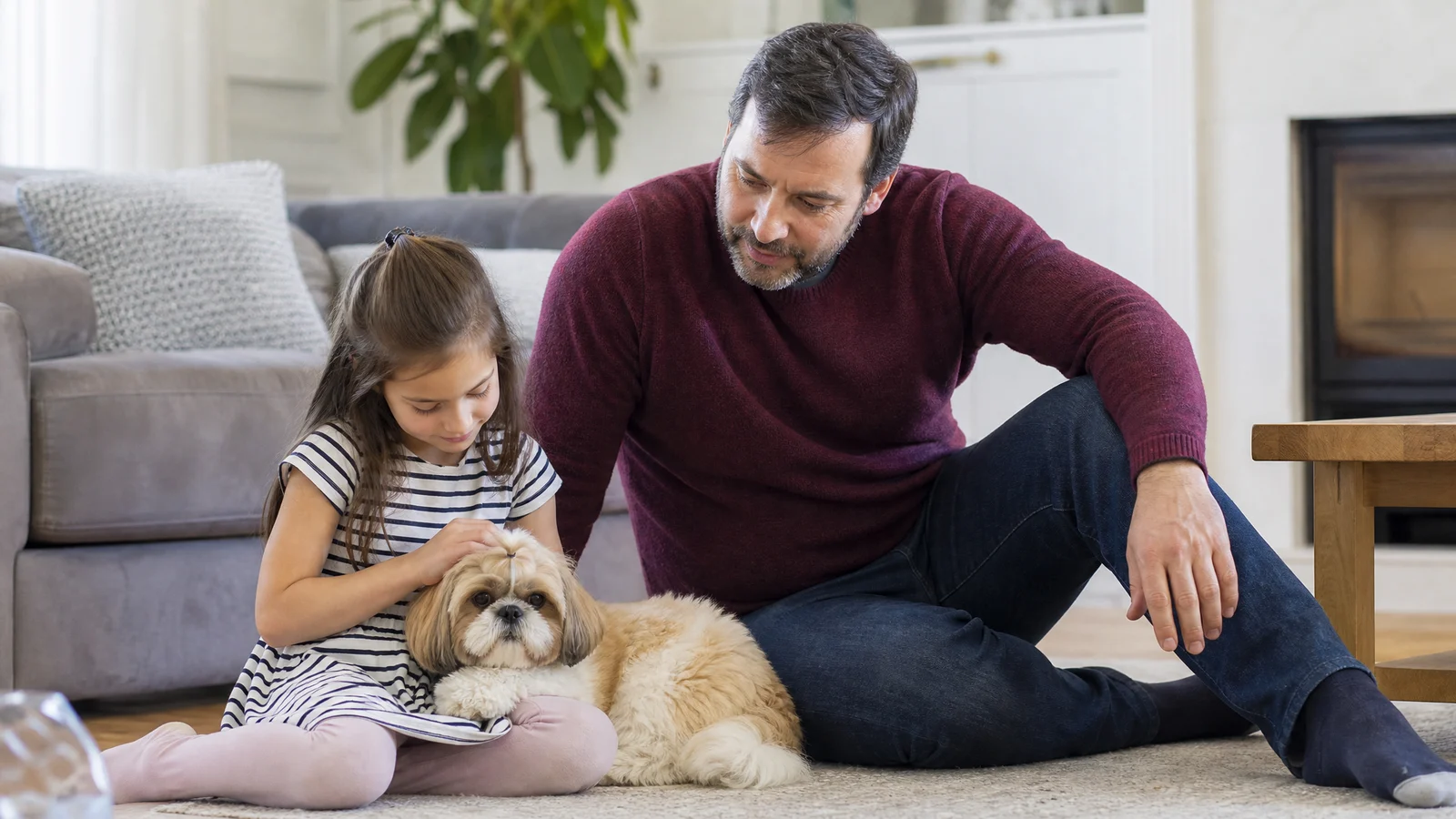
A Shih Tzu trots after you from room to room, tail wagging, and sits perfectly for a treat. The moment the treat is gone, they drift off to see what else the house has to offer. Many owners know this scene by heart.
What is going on is a breed shaped for a thousand years to please people. AKC rates the Shih Tzu 5 of 5 for affection with family, with young children and with other dogs, 4 of 5 for trainability, and 3 of 5 for openness to strangers, barking and energy. Each number carries a training consequence, and misreading them can leave you with a charmer who runs the house or a velcro dog who panics when you leave.
We'll walk you through each trait in turn, from affection and children to other dogs, stubbornness, energy and sensitivity to your tone, then finish with the signs that training is working and the signs that call for a trainer or vet.
Shih Tzu Temperament and Affection as a Training Lever
Affection is the strongest tool you have. The breed earns 5 of 5 for affection with family, the highest score on a range that starts at independent and ends at lovey-dovey. These are true lapdogs who thrive on attention, so in training terms your attention is the paycheck. A cheerful voice, a lap or a quick game can pay as well as food.
Dogs still vary. Most owners who compare the sexes say males are sweeter, more sociable and more laid back, while a minority prefer females and some see no real difference. Treat that as a pattern owners report and judge the dog in front of you.
Pay in Praise and Tiny Treats
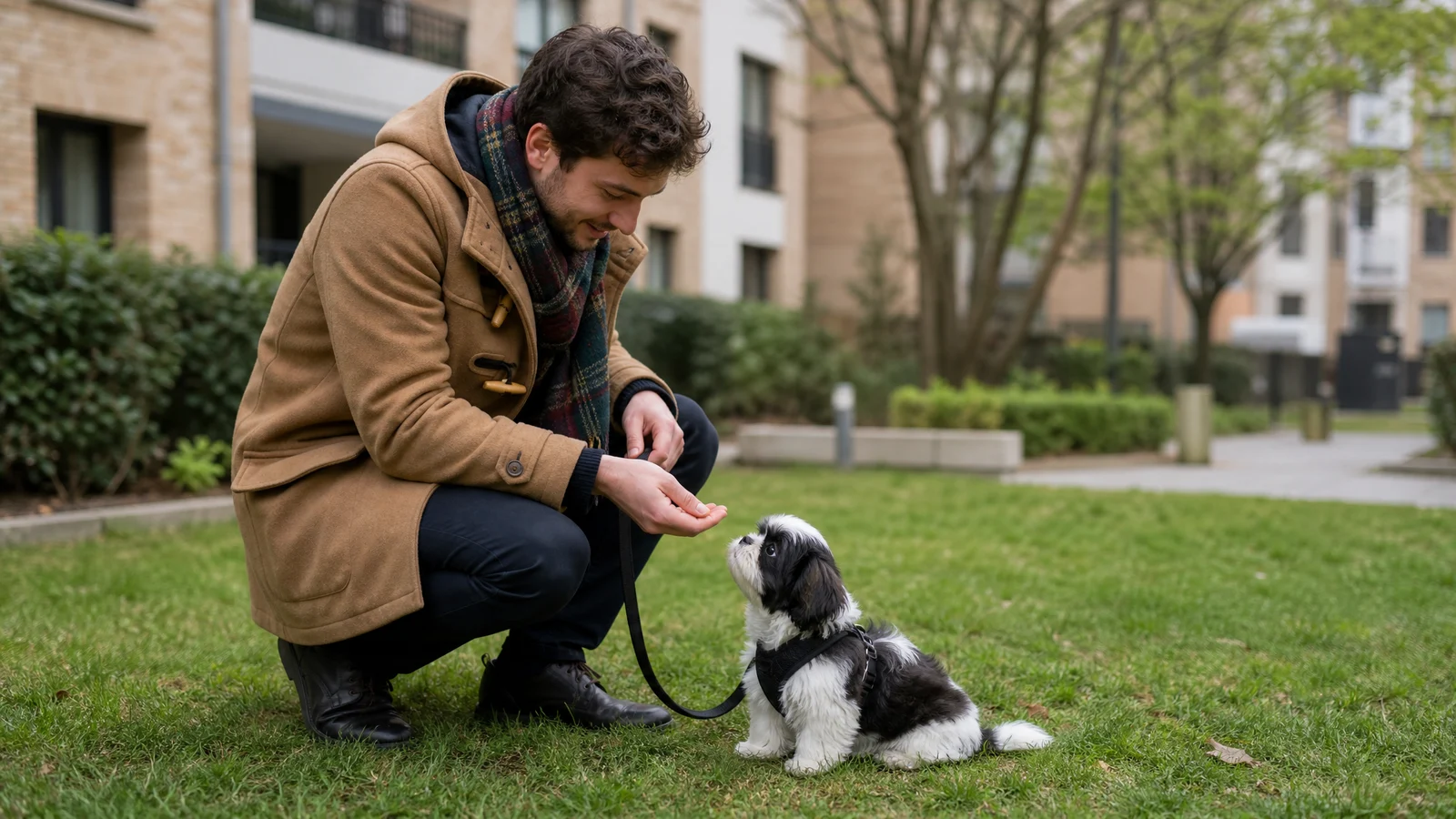
Start with a marker word, a single bright syllable such as yes. Think of it as a camera shutter: it freezes the exact moment you liked, so the dog knows which part of the last few seconds earned the reward. Follow it with a pea-sized treat and warm praise.
Small dogs find people leaning over them uncomfortable, so sit on the floor or lift the dog onto a couch or low platform while you train. For unwanted behavior, a brief time-out works well here. A calm minute apart from you means a lot to a dog who craves company.
Read the Wordless Signals
Many owners describe Shih Tzus who rarely bark, some only a handful of times in a lifetime. They talk in sighs, grunts, snorts, sneezes, side-eye or a lip curl, and save barks for play, food, a knock or a fright.
Treat these as messages worth answering. Responding to a sigh at the door with a cue and a reward gives you far more moments to pay than waiting for a bark ever would. Some quiet puppies do find their voice later, often by copying another dog.
When the Bond Turns Clingy
Many owners describe velcro dogs who follow them to the desk, the bathroom door and the shower. Several tie the habit to working from home and saw their dog struggle once everyone went back out. Owners of young puppies describe crying the moment they leave the room.
The cure is practice at absences so short they are boring, built up slowly. Our guide to teaching alone time lays out the steps.
Does a Shih Tzu Do Well With Children?
Yes, with an adult in the room. The breed rates 5 of 5 for good with young children, and Shih Tzu are known to be particularly affectionate with kids. That rating comes with a standing reminder that dogs should always be supervised around young children, so the rules below protect a small body rather than express distrust.
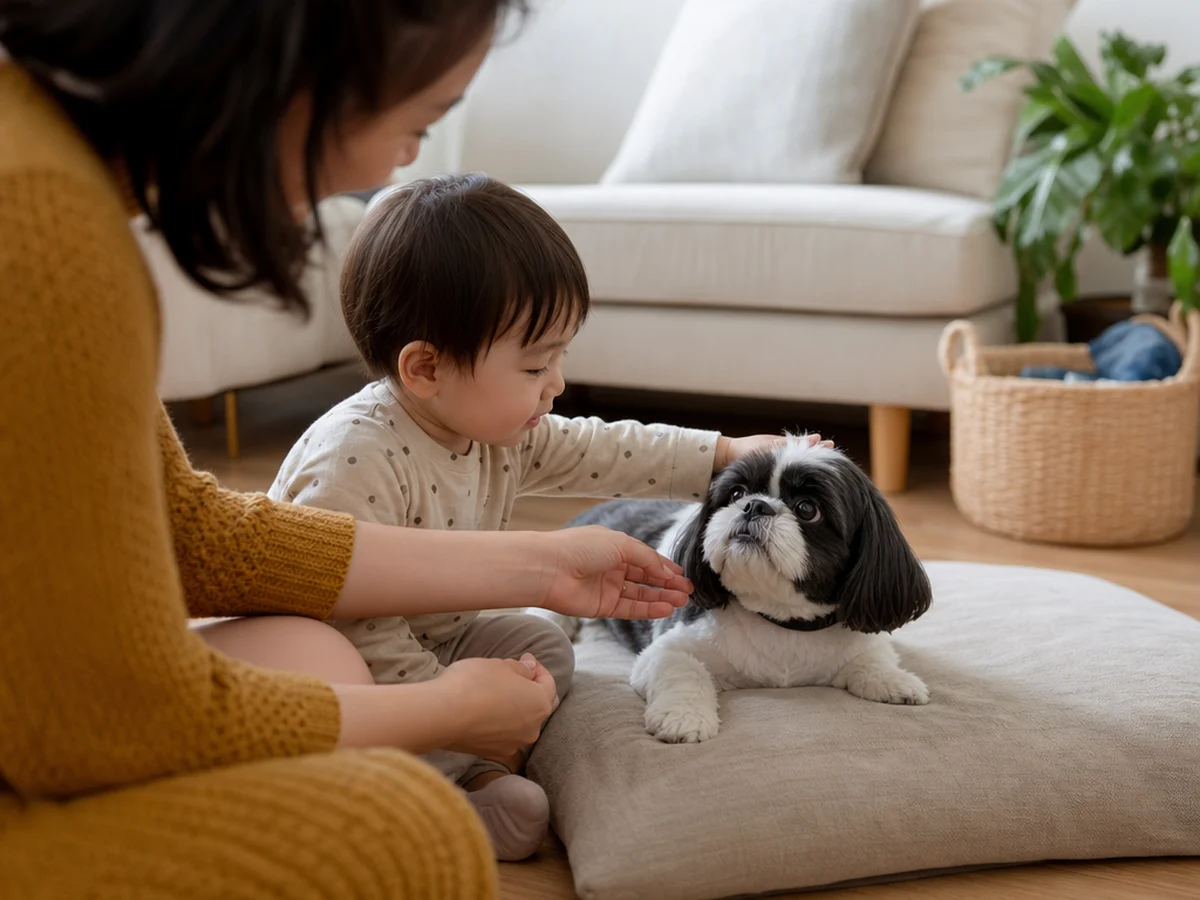
The real concern is the puppy stage. Many breeders hesitate to place a young puppy with pre-school children, and not because Shih Tzu dislike kids. Adults are sturdy for their size, at 9–16 pounds and 8–11 inches tall, but puppies are fragile.
Squeals and sudden movement can frighten or overexcite a puppy into nipping, and teething adds to it. A tired puppy who is cornered may nip too if they cannot rest. Families with toddlers may do better with an older dog. For the nipping side, see when puppy biting stops.
Rules for the Children
Give kids a short list they can remember:
- Sit on the floor to play, so the dog is never grabbed, loomed over or carried around.
- Do the puppy shuffle, sliding feet along the floor, because Shih Tzu love being underfoot.
- Keep fingers away from the dog's eyes, which are easily injured.
- Skip the poking, pulling, sudden movements and loud noises.
- Let the dog rest undisturbed when tired, and never leave child and dog alone together.
Rules for the Dog
Teach the dog that children predict good things. Have a child sit calmly and drop a tiny treat to the floor, then end the game while it is still going well. A resting spot that children never enter gives a tired dog somewhere to go.
A minority of owners describe limits, such as dogs with insecure backgrounds or failing eyesight who snap if touched unexpectedly. Treat a growl as information, change the situation, and let nervous or older dogs see a hand coming.
Sociability With Other Dogs and Your Shih Tzu's Temperament
This is a social breed, and the 5 of 5 for other dogs means classes, playdates and park outings tend to go well. Many owners describe dogs who like other dogs while still keeping people as the favorite. Being yappy or reactive is not an inborn small-breed trait, so socialize a Shih Tzu puppy the way you would any puppy.
Friendly Is Not the Same as Polite
A dog who loves every greeting will surge toward the next one. Teach a sit before hellos, keep leash meetings short, and reward glances back at you instead of lunges ahead. Praise is the pay again, so check-ins come easily to this breed.
An under-socialized adult can still improve. Pair the sight of other dogs at a distance with treats until the sight predicts good things.
Adding a Second Dog
Owners who added a dog describe a rocky start, with growling, jealousy or being ignored, that settled with time. Many pairs became close, even inseparable, though some resident dogs never warmed up and a few Shih Tzus stay scared of or uninterested in other dogs.
Low-pressure introductions help. Let the dogs set the pace, use a gate only the small dog can pass, give separate bowls and toys, and add exposure gradually each day.
Expect individuals, too. Owners with more than one Shih Tzu often describe near-opposites under one roof: one quick and eager, another unable to hold a sit-stay, one tireless on walks and another done early. Barking can split the same way, with one dog a siren and the other near-silent.
Most owners report peaceful or even cuddly relations with cats and small pets, though a few describe pestering, such as play-stalking the cat.
Is a Shih Tzu Really Stubborn?
Mostly no. The breed rates 4 of 5 for trainability, which says the ability is there. Some owners call the same dog smart and stubborn in one breath, which tells us the gap is willingness, not capability.
After many years of training this breed, we sort the behavior into causes before calling anything defiance. One cause is charm: letting a Shih Tzu get their way creates a difficult pet, and begging works beautifully on soft hearts. Another is distraction, or a payoff that is too small. This table sorts the common cases.
| What you see | What it usually is | What helps |
|---|---|---|
| Sits for a treat, wanders off when it is gone | The pay ended | Mix in praise, play and life rewards, and pay at unpredictable moments |
| Looks away when called | Something else pays better | Practice with fewer distractions and make coming to you the best deal around |
| Eyes you at the table | Begging has worked before | Give the same answer every time and reward a settled spot |
| Acts dumb when they do not feel like it | The reward is not tempting enough | Switch to a higher-value food such as egg, chicken or peas |
| Cannot hold a sit-stay | The step is too big | Shorten the stay and build it slowly |
Routine is your best ally, since Shih Tzu do what they want but respond well to ritual. Same cue, same place, same order of events, and the dog starts to expect the next step.
Frame it as their idea, too. A dog who thinks they are manipulating you into a reward performs eagerly when asked for a little at a time.
Some skills simply come slowly. Owners report dogs who never grasp sit-stay, puppies too excitable for tricks until after their first birthday, and unreliable recall off leash, even in highly trained dogs. Others describe quick learners, rescues included, doing tricks, agility and therapy work. Plan for repetition and keep a leash on until recall is proven. Our complete training guide builds those skills step by step.
Playful Energy, Calm Settling in Shih Tzu Temperament
Expect moderate energy that arrives in bursts. The breed rates 3 of 5 for energy, and owners describe zoomies, pillow wrestling and furniture parkour alongside a usual walk of around 30 minutes.
If you wonder whether your dog is lazy, owners of calmer dogs describe the same thing: done at 20 minutes, asking to be carried home. Others build up to hours over the years, so dogs vary, and owners keep long outings for cool weather.
Some owners link chewing and other mischief to too little exercise, and report it fading with a daily walk or company. Puppy wildness fades with time, as training through adolescence explains.
Keep Sessions Short
Short sessions fit this temperament. Less is more, because an over-drilled puppy can lose their spark, and it is far easier to tone down an exuberant puppy later than to restore what overtraining takes away. Ask for a few quick cues, then play, and stop while the dog still wants another round.
Teach a Settle
Calm is a skill, so define it. A settle means lying relaxed on a mat until you release them. Reward each step onto the mat, then the moment they lie down, then gradually longer stays, and practice while you watch television.
The same mat solves the door. Shih Tzu may bark to announce a visitor and then love the guest, so train a calm greeting routine rather than expecting silence. Teach the dog to go to a mat and wait until invited, rewarding quiet before the hello. Our article on door alerts and teaching quiet goes deeper.
Sensitivity to Your Tone and Shih Tzu Temperament
This breed is sensitive, so keep your voice kind. Shih Tzu are extremely people-oriented, and the same trait makes them poor at taking harsh handling. A raised voice tends to make them dig in rather than comply, and owners say their dogs wilt under strict voices and answer to gentle encouragement.
Use one upbeat tone for every cue. Introduce new behaviors bit by bit, and frame each task so the dog feels they are getting something they want. Some owners use song and petting as the reward. A soft voice and a quick reward move this breed faster than volume ever does.
When the dog does something you dislike, interrupt calmly, redirect to a better choice and reward that. Good training teaches what to do instead, and a dog who loves to please learns that quickly.
When Your Shih Tzu Needs a Professional
Because the breed lives to please, progress tends to look warm and eager rather than dramatic. These are the signs that training is working:
- The dog checks in with you on walks and in new places without being asked.
- They settle on the mat quickly once cued, even with company in the house.
- They relax when handled for brushing, paw wiping and vet-style touches.
Keep regular vet visits on the calendar, and call early if behavior shifts, since pain can look like a change in temperament. Then ask a trainer who uses positive reinforcement, or your vet, for help if any of these show up:
- Stiffening, snapping or growling near people, children or food, particularly when the behavior is new.
- Fear that lingers instead of fading, like hiding, trembling or refusing to move outdoors.
- Sudden changes in behavior, appetite or sleep.
- Panic whenever you leave. A dog with separation anxiety may still be distressed in a crate, so use a safe room instead while you get help.
All of this comes back to what Shih Tzu were bred for: loving people. That makes the relationship itself the training. Pay them in warmth, hold your rules kindly and the same way every day, keep sessions short, and read their quiet signals, and the willingness this breed is famous for will follow.
 Training basicsAre Shih Tzus Smart? Training Them With the Right Reward
 Puppy trainingHow to Care for a Shih Tzu Puppy: The First Week Home
 Training basicsHow to Potty Train a Shih Tzu: Schedule, Rewards, Patience