 Shih Tzu
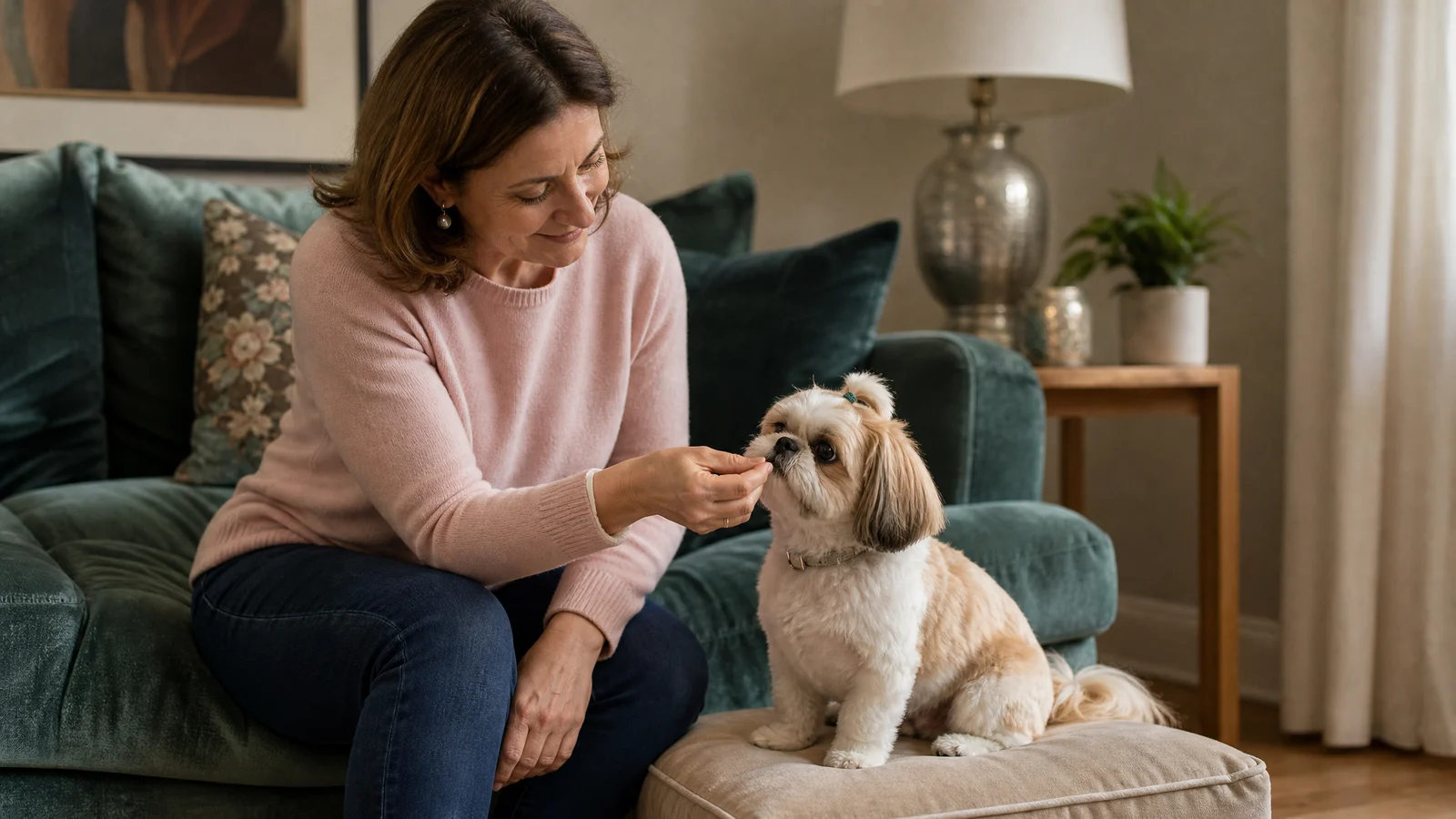
The usual advice says the Shih Tzu is easy to train. The AKC gives the breed 4 of 5 for trainability, where 5 means eager to please, and says a people-oriented dog like this does best on praise and rewards. Owners report something more mixed: a dog who is plainly clever and just as plainly doing what they want, looking away when called or acting dumb when the mood is wrong.
This article looks at what smart really means for a Shih Tzu and tests the beliefs that trip owners up. Read on to learn whether the breed is dim, how eager to please and strong-willed can both be true, what a clever dog still has to be taught, why treats are pay rather than bribes, and what a trained dog looks like at five. Get the reward right and a quick, loving partner appears. Get it wrong and you live with a charming household boss.
The Belief That Shih Tzus Are Not Smart
The belief is easy to understand. A small companion dog who spends the day on a lap looks decorative, and a Shih Tzu who gazes past your request does nothing to change that impression. We have trained this breed for many years, and we can tell you the impression is wrong.
The 4 of 5 rating measures trainability, which is about how willing a dog is to learn what you ask. It tells you about attitude and says nothing on its own about brainpower, and no source we know of ranks the breed against others for intelligence.
The strongest evidence comes from people who compete. Performance competitors in the breed's national club describe Shih Tzus as smart and fun to train, and they invite pet owners to try the performance side of the breed. The first obedience and rally championships for the breed are on record. That is a very different picture from the stubborn lapdog many people expect, and it shows what happens when a Shih Tzu is given a job and a reason to do it.
What Owners See Day to Day
Owners back this up at home. They report therapy-dog work, tricks on command, high five and down, agility classes, and dogs who solve a pick-which-hand game without being shown. A minority describe dogs who are extremely smart, learn quickly and listen well, including rescues and rehomed adults. Our guide to tricks and dog sports shows how far that cleverness can go.
The other half of the report is just as common. Some owners say basic commands come slowly, with a dog who knows only sit or never grasps sit-stay. Yet several owners call that same sort of dog brilliant and stubborn at once, which tells you the trouble is willingness rather than ability. If your Shih Tzu is not performing, look at motivation and teaching before you doubt their brain.
Eager to Please or Doing What They Want in Shih Tzus
Two views of the breed sit side by side, and we don't think you have to pick a winner. The trainability scale leans toward dogs who want to make their owner proud, and the same breed profile calls Shih Tzus extremely people-oriented. Then a respected breeder, quoted in the breed's puppy training advice, says Shih Tzu "do what they want but they respond well to ritual." It sounds like an argument, but both lines describe one dog.
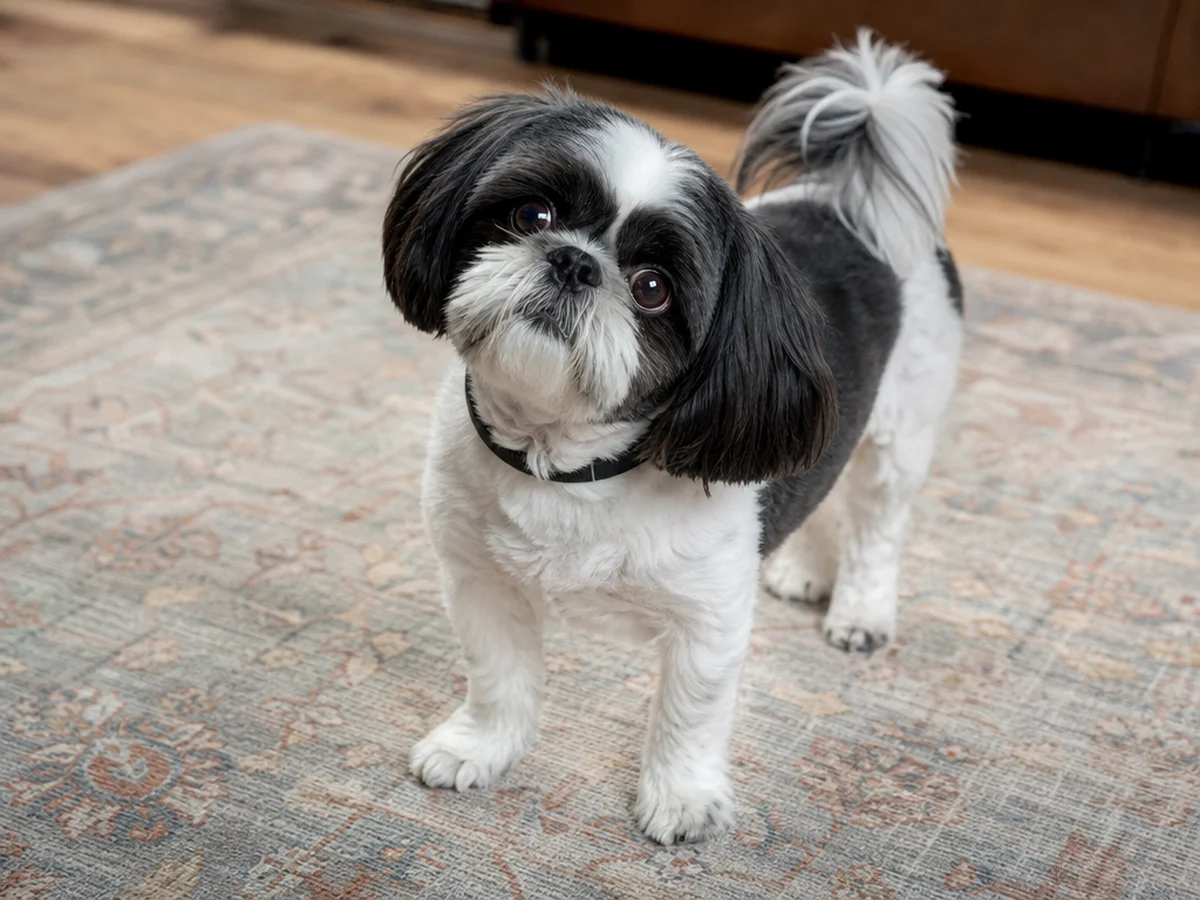
Breed writers add a third note, that training a Shih Tzu can be "amusing and frustrating." The charm tends to talk owners into letting the dog have their own way, and the result can be a chubby, not fully housebroken dog who is hard to groom. The weak link in that story is the owner's resolve, not the dog's mind.
Eager to please describes how a dog feels about you, not how they feel about your request. A people-oriented dog wants your attention, your voice and your lap, which is not the same as wanting to sit on cue in the middle of a good sniff. Many owners say their Shih Tzus need far more consistency than other breeds they have trained. Worrying about that is natural, and the good news is that consistency is a habit you can build.
Same Breed, Very Different Dogs
Averages hide a wide spread. Owners with more than one Shih Tzu often report near opposites under one roof. One dog is quick and eager while another cannot hold a sit-stay, one is tireless on walks while another is done at 20 minutes, and one is safe off leash while another never will be. Sizes can differ as much as habits, which leaves owners wondering how the dogs are the same breed.
So don't expect the second dog to train like the first, a point we expand on in adding a second dog. Judge each Shih Tzu by what they work for.
The Idea That Smart Dogs Train Themselves
Plenty of owners expect a clever puppy to absorb the house rules by watching, and it's a reasonable hope. Intelligence helps a dog spot patterns, but it cannot tell them which pattern you care about. A sharp puppy may work out that whining brings you running long before they work out what the word down means.
What a Clever Puppy Still Needs Shown
Owners report puppies who have not yet connected praise with doing right, dogs who know only sit, and excitable youngsters still too wound up for tricks at 7 months. Some calmed down and learned tricks only after turning 1. Owners who report progress describe short, repeated, positive sessions, and they note that new things take a lot of repetition. Nothing about that points to a dim dog. It is simply what learning looks like in a small, excitable one.
What you are really teaching is motivation. One well-known trainer holds that only a small part of training is showing the dog what to do, and the great bulk is making them want to do it. For a breed that does what they want, that split should sound familiar.
Timing and Setup for a Small Dog
Timing carries much of that motivation. The marker word has to land exactly on the wanted behavior, and the reward should follow within three seconds. With a newly adopted dog the window is tighter still. Reward immediately, praising and treating toileting outside right away for the first few weeks, because a treat even a minute later is too late.
Posture matters too. Most dogs dislike people leaning over them, and small dogs feel it more, so sit on the floor or raise your Shih Tzu on a couch or platform. Introduce each new behavior bit by bit. Clever dogs learn fast, including what you did not mean to teach, such as the discovery that looking away ends the request. Smart dogs still need a teacher.
Why Treats Are Not Bribery for a Smart Shih Tzu
The worry is familiar: feed a dog for working and you will raise one who only works for snacks. The difference lies in timing and purpose. A bribe shows up before the behavior to talk the dog into it, while a reward arrives afterward as pay for effort.
Food, toys or praise that a dog truly loves, handed over right after a behavior, make that behavior likelier to happen again, which is why reward-based training is the standard approach. Owners say the same of Shih Tzus: food is what makes training work.
Finding the Reward Your Dog Wants
Owners name egg, chicken, peas, jicama, watermelon, small kibble, or a treat paired with praise as their dog's best pay, and some dogs comply only for something very tempting. That is information about price, not a flaw. Many dogs also love carrots, green beans, sweet potato, broccoli and blueberries, and frozen green beans can soothe a teething puppy.
Keep pieces about pea-sized. Tiny treats suit a small dog and let you pay many times in a short session, and teaching sit can take around 30 treats in a couple of minutes. Test praise too. In a 2016 brain-imaging study of 15 dogs, most showed the same or more reward-area activity for owner praise as for food, and only two strongly preferred food. Some owners also report good results with song and petting as the reward.
This is general information, not veterinary advice. Check with your veterinarian about which treats suit your dog and how much of them fits into a day's food.
Fading Treats Without Losing Cooperation
While a cue is new, reward every correct response, which usually takes only a few days. Then switch to unpredictable timing, starting at about one treat per three correct responses and working toward about one per ten. Rewarding every time or never both lower compliance, so never drop the pay entirely.
Sessions of two to five minutes, twice a day, are plenty. A dog who obeys only when food is visible has been treated too often for too long, and that is the spoilage worth avoiding. Pay well, pay unpredictably, and keep paying.
Stubborn Does Not Mean a Smart Shih Tzu Is Untrainable
Stubborn is the word owners and breed writers use for willingness. It is a description, not a measured trait, and it hides a useful question: is your Shih Tzu choosing not to, or have you not yet shown them what you want? The fix differs, and these signs help you tell which one you face:
- A dog who is choosing performs the cue instantly in the kitchen for chicken, then looks away or acts dumb when called in the yard.
- A dog who has not been shown fumbles even at home, needs a lure every time, or performs the cue in only one spot.
- A dog in adolescence can look like both, knowing a cue one day and seeming to forget it the next.
When They Are Choosing
Raise the pay and shrink the ask. Breed writers suggest framing tasks so the dog thinks they are getting something they want, because a Shih Tzu who believes they are manipulating you into a reward will perform eagerly when asked for a little at a time. Owners add that their dogs wilt under strict voices, and gentle encouragement does far more. Yelling usually just makes the dog more stubborn.
When you need a calm interrupt, a brief time-out works well for this breed, since Shih Tzus crave company. Separate them from you for a moment, then go back to training. Owners use short ones for dogs who hate isolation.
When They Have Not Been Shown
Go back a step. Adolescence arrives at 7–8 months and lasts about two months, when puppies can turn moody and forget earlier training. Plan for a regression through roughly 7–9 months by easing the criteria and raising the reward rate, rather than deciding the dog has gone stubborn for good. Our page on training through adolescence covers that stretch in more detail.
Recall needs the same patience. Some owners report dogs who run off or leave for children offering pets, so keep a leash on until recall is proven. A dog who wants a better offer is still a dog who is listening.
Does Ritual Beat Repetition for a Shih Tzu?
The breeder's remark about ritual explains why two owners can use the same cue and get different results. Repetition means asking for the same thing again and again. Ritual is a predictable shape to the day: the same cue before the bowl, the same spot, the same marker word, the same short game before the walk. A people-oriented dog reads that shape easily, and cooperating becomes the obvious next step.
Repetition has a cost in this breed. Breed writers say less is more, because it is much easier to tone down an over-exuberant puppy later than to restore the spark lost to overtraining. So the answer is both, in the right proportions. Ritual is the frame, and repetition fills it in small doses.
The risk to the frame is usually you. Charm wins a treat, a skipped brush, an accident left unaddressed, and a dog who gets their way once will ask again. Hold the rules kindly, with the same answer every day. Exercise belongs in the ritual as well.
Owners link chewing and other misbehavior to boredom, and several say it eased once a daily walk or daytime company with other dogs became routine, which our guide to Shih Tzu exercise helps you plan. Ritual wins, and repetition is how you build it.
A Smart Shih Tzu at Five Years Old
With steady rituals and fair pay over the years, a Shih Tzu usually looks like a different dog from the puppy who ignored you. Cues have become habit, the day has a shape, and the charm now works in your favor. Many owners describe dogs doing tricks, agility and therapy work. A therapy team starts with a well-trained obedience dog, so the therapy and service work overview begins there.
The upkeep never fully disappears. Keep paying for good work with unpredictable rewards, keep sessions short, and keep refreshing recall. Off-leash reliability stays the exception, though a minority of owners report dogs who stop on a dime, so assume a leash until your own dog has proved otherwise.
Stamina keeps changing with age and weather. Most owners who give a usual walk length settle around 30 minutes, some dogs manage far more after years of building up, and others tire early or ask to be carried. Keep long walks to cool temperatures, and keep up regular vet visits so you notice when a once-willing dog starts to slow.
Expect a Shih Tzu who grows steadier and more reliable with every year of the same rituals and rewards, who is plainly smart, and who will still decide now and then that the moment belongs to them. Your job is to keep the routine steady, the pay worth working for, and the asking kind.
 Puppy trainingHow to Care for a Shih Tzu Puppy: The First Week Home
 Training basicsHow to Potty Train a Shih Tzu: Schedule, Rewards, Patience
 Training basicsHow to Train a Shih Tzu: The Complete Guide