 Shih Tzu
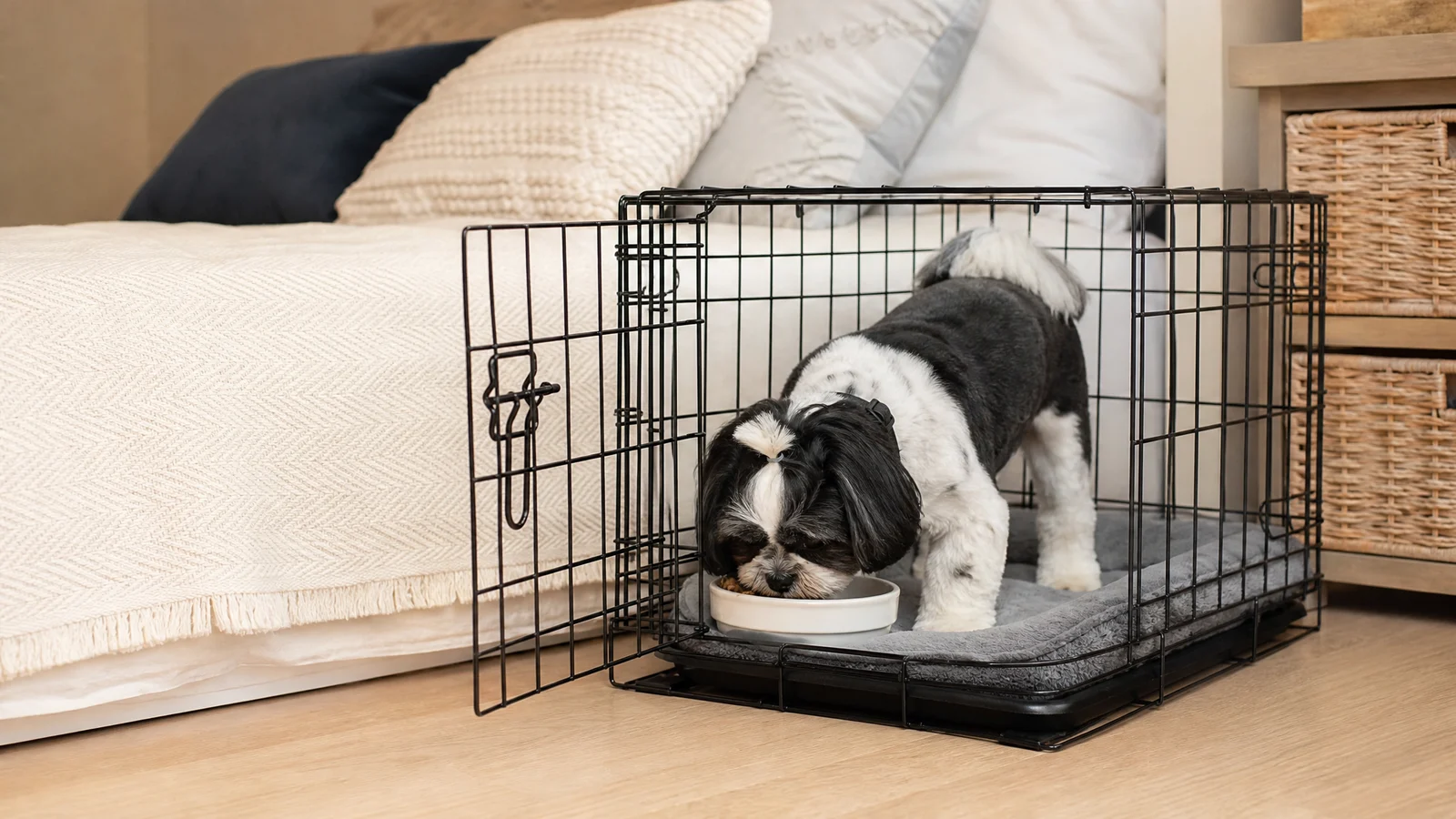
Shih Tzu puppies usually go home at around 12 weeks old, and the question on every new owner's mind is how many days until the crate means a full night's sleep. Nobody can give you an honest number. Some puppies settle within days, and others cry in the small hours for longer. What you control is the routine around the crate, and that routine decides which puppy you end up living with.
Below, you'll find how to size the crate for an adult, how meals and a bedtime treat build the habit, and how to release a noisy puppy without teaching them to shout, including the one piece of crate gear that matters for a long beard. We reviewed 1,152 Shih Tzu owners' first-hand accounts, and the nights they describe look a lot like the ones we plan for here.
Pick a Crate That Fits an Adult Shih Tzu
Most people shop for the puppy in front of them, then discover the puppy was a temporary resident. A Shih Tzu stays small, but the fluffy bundle still grows into an adult, and a crate you replace at six months is money spent on the wrong dog. Buy for the adult, but keep the puppy's sleeping space snug, because spare room invites a toilet corner.
The rule is a crate sized for the dog: enough room to rest comfortably, not a studio apartment. The reason is practical. A puppy with room to spare will sleep at one end and use the other as a bathroom. If a puppy soils the crate after being empty and not left too long, suspect a crate that is too big, or bedding so absorbent that the wet spot disappears from under them. Check those two things before you decide the puppy is just slow.
Where the crate goes matters nearly as much as what it measures. Put it out of the main traffic but within earshot of the household, and a radio or TV nearby helps a puppy settle and covers noises that might startle them.
Feed Meals Inside so the Crate Predicts Good Things
The fastest way to make a Shih Tzu like a room is to serve dinner in it. A bowl that appears only inside the crate turns the doorway into the best part of the day. Some breeders have already started this, so your puppy may arrive thinking of a crate as a den. Ask what the breeder did, then keep doing it.
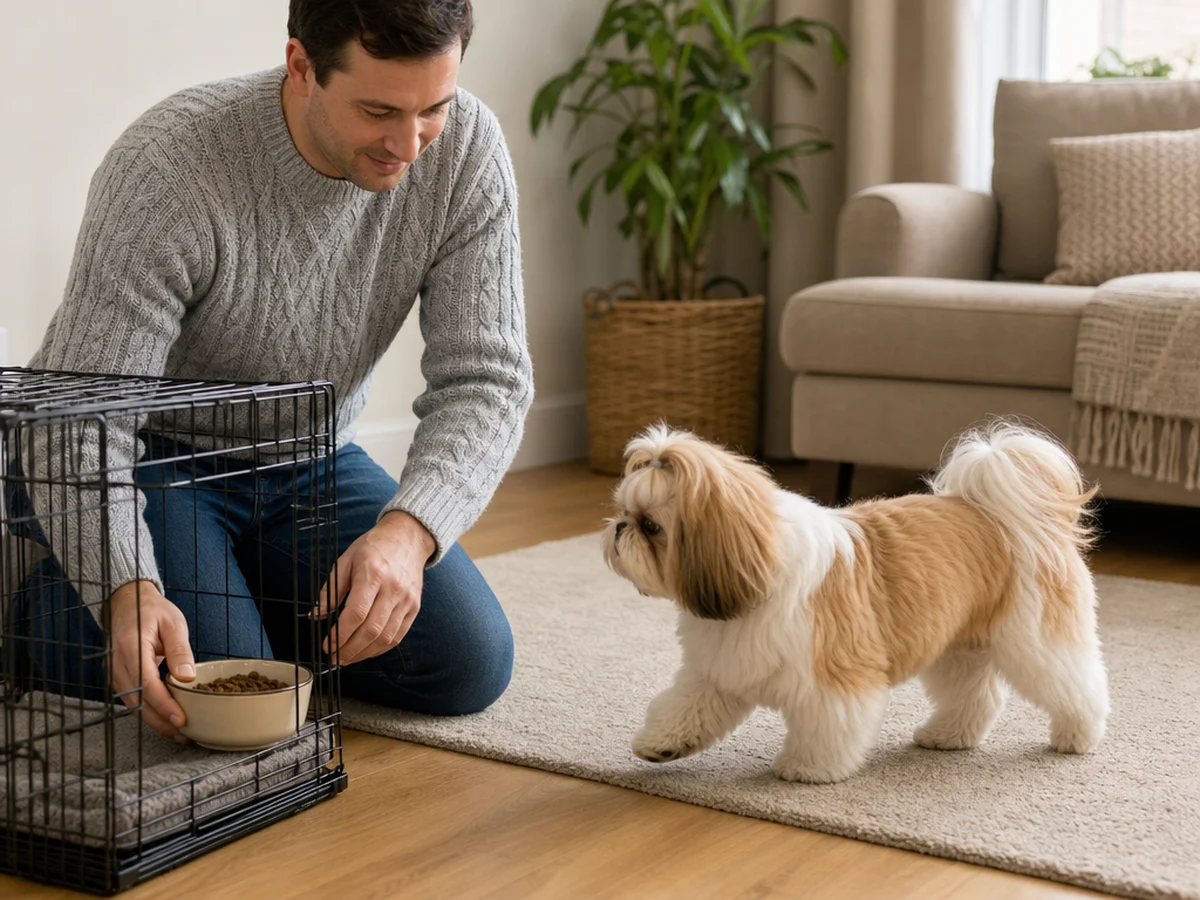
The same habit does house-training work. Puppies are naturally clean and learn to hold it until released, which makes the crate a huge help, as long as nobody confines them for more than a few hours at a time. Puppies should not be crated for more than two to three hours, and forcing them to soil their sleeping area can cause serious house-training problems.
So the sequence is crate, then straight out on leash to the same spot, then a treat the moment they finish. Feed on a schedule so potty times become predictable.
Set your expectations now. Shih Tzu are often considered hard to housebreak, and 10% of the owners we reviewed who wrote about potty training, crates and sleep described it as slow, hard work. Breeder Madonna Holko finds most dogs are not completely reliable alone for many hours until about eight to ten months old. That is normal for the breed, and the crate is how you bridge the gap.
A Bedtime Treat Closes Every Night in the Crate
Every evening should end the same way: last trip out, a calm word, a small treat, and a door closed behind a puppy who walked in on their own. Announce bedtime, hand over the cookie, and most puppies learn the system fast, often hurrying toward the crate before you reach the treat jar. This breed does well with ritual, and this ritual does a surprising amount of your work for you.
Location matters more than cleverness. Many owners say first-night crying often eased once the crate sat right beside the bed, sometimes with a hand resting inside or a worn T-shirt tucked in. Not every puppy cooperates, and a minority panic outright. If yours does, do not treat it as a contest. Move closer, shorten the stretch, and use our first week and first nights guide to build back up from there.
Keep the same order each night for the first weeks. Predictability is what lets a small dog stop wondering what happens next.
The Crate Is a Sanctuary and Never a Punishment
If the crate is where the puppy lands after chewing a slipper, you have taught them that the crate is where bad news happens, and a companion breed that craves your company will not forget it. The crate should be a sanctuary, made pleasant with toys and treats, and kept where people are by day and in the bedroom at night so the dog is safe but never lonely.
The RSPCA puts it bluntly: a safe haven, never a sin bin, and never a way to stop unwanted behavior. A Shih Tzu who misbehaves usually needs closer supervision, a chew toy or a baby gate. If you want a consequence, a brief, calm break from your company works well for this breed, because they crave people. That break happens outside the crate.
One more limit. Shih Tzu were bred as companions and do not fare well alone for long stretches, so a dog already anxious when left should not be shut in at all. A dog with separation anxiety stays anxious in a crate and may soil, howl or hurt themself trying to escape. Use a safe room instead, build alone time in tiny steps, and keep leaving and returning boring.
Let a Shih Tzu Puppy Out Only When Quiet
In the small hours the puppy discovers that crying produces a human, and a smart little dog will run that experiment twice. Whatever you do at that moment becomes the rule. Open the door during the noise and you have paid for the noise. Wait for a pause, however brief, and the pause becomes what earns the door. Then keep the release low-key, because a big fuss teaches the puppy that the best part of crating is leaving it.
If fussing runs past a few minutes, drape a towel over the crate to block the view, and if that fails, close the room door. Experienced breeders read this fussing as a puppy testing whether they can get their way, which fits a breed that wants to see their people. It is also why a crate beside you works so well, and why a favorite toy or two makes the inside more interesting.
Here is where we push back on the standard line to ignore all crying. Blanket advice to ignore everything misses that a cry is sometimes a real request. A young puppy genuinely needs a night potty trip. The workable version is to take them out when one is due and otherwise wait for quiet.
A Clip-On Crate Water Bottle Keeps the Beard Dry
A bowl in a crate has two futures: it tips, or a face full of long hair dunks into it. Either way you end up with wet bedding and a puppy wearing their drink. The breed-specific fix is a water bottle attached to the crate, which stops the bowl from tipping and keeps water from dripping off the moustache and beard onto the chest and the floor.
Introduce it like everything else: show the spout, let the puppy lick it, and reward the first sips. Check now and then that it flows, since a puppy who finds the bottle empty has a fair reason to complain. Dry bedding also makes a real accident easier to read, and it keeps that coat from sitting damp all night.
Steady Crate Habits Give a Shih Tzu Settled Nights
Put the pieces together and the crate looks less like a trick and more like a daily rhythm: a space sized for the adult, dinner inside, a treat at bedtime, a door that opens for quiet and never for punishment, and a bottle that spares the beard.
Weeks of repeating those steps will do more than any clever fix. Expect setbacks, book regular vet checkups as the puppy grows, and if a settled dog suddenly starts having accidents, call the vet before you blame the training.
The questions owners ask next tend to arrive in this order:
- How long can your puppy be alone? Build it from minutes upward, and read our guide to common Shih Tzu behavior problems if barking or distress shows up.
- What changes as the puppy grows? The puppy training timeline lays out the stages, including the regression that tends to appear in adolescence.
- How do you house-train faster? Start with the schedule and rewards in how to train a Shih Tzu, and have everyone in the household follow the same plan.
A calm, steady routine is what turns the crate into a place your Shih Tzu chooses on their own, and that is the whole point of using one.
 Exercise and jobsHow Much Exercise Does a Shih Tzu Need? Walks and Heat Limits
 Training basicsShih Tzu Harness and Leash Training for Walks Without Pulling
 Puppy trainingShih Tzu Puppy Training Timeline: From 12 Weeks to Adolescence