 Shih Tzu
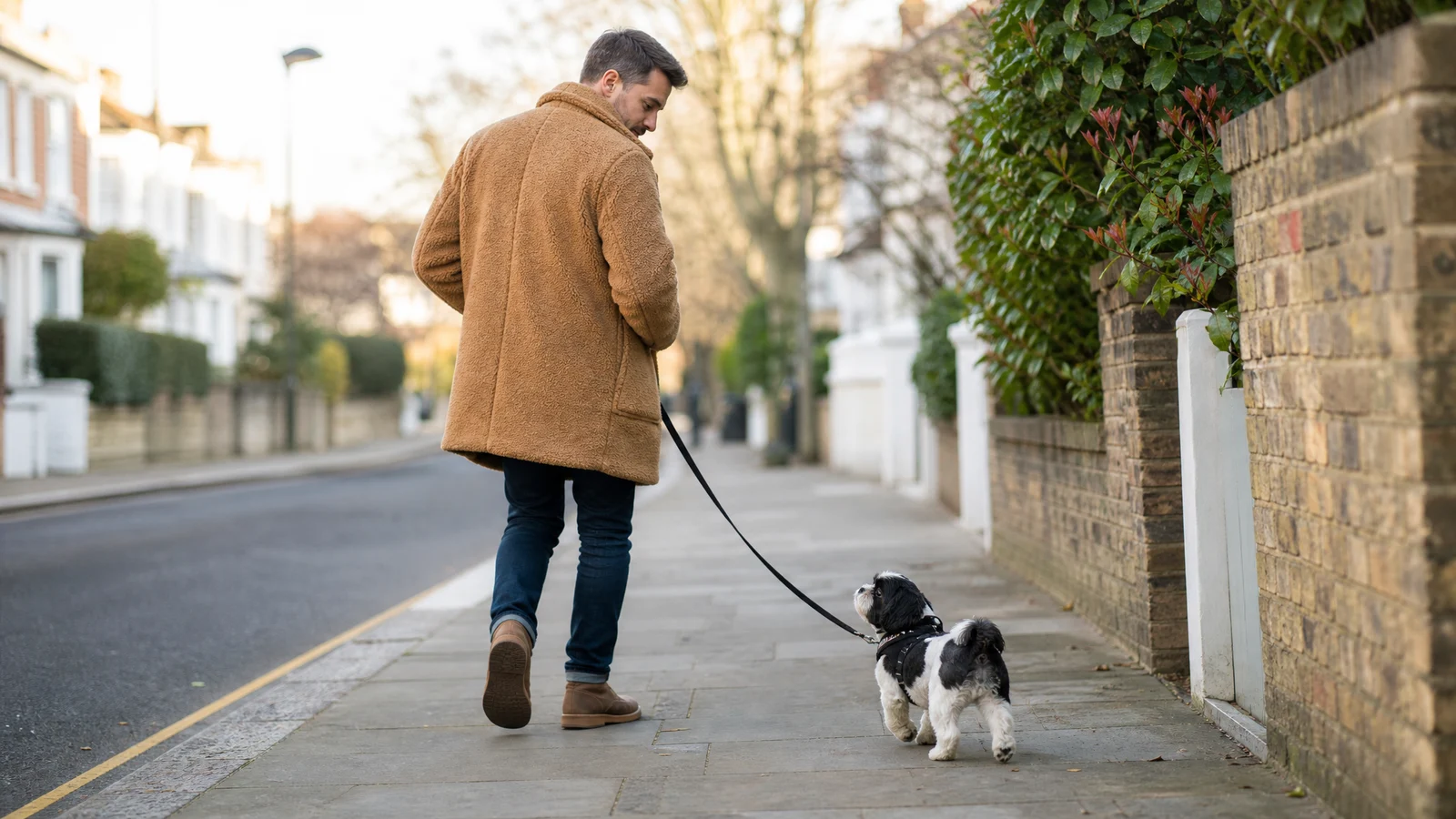
The habit to avoid is clipping a leash to a collar and towing a puppy along when they stall. Breeders who know this breed advise the opposite: go where the puppy goes. The puppy plants their feet, you tug, and the walk becomes a standoff with all the strain landing on a small throat. The fix is to clip to a harness, follow your puppy wherever they head first, and keep those early outings so pleasant that the leash predicts treats.
Below, you'll find how to choose and fit a harness, how to read pulling, coughing and backing out as separate signs, and how to handle freezing and other dogs, including a step-by-step loose leash and a two-week plan. We specialize in this breed's behavior and training, and a Shih Tzu who learns that walks are fun becomes a cheerful partner who checks in with you. One who learns the opposite plants at the front door.
Leash Gear for a Shih Tzu
What you clip the leash to decides where the pressure goes. A breeder writing for the breed's parent club advises a harness or a soft kindness collar for leash training, to keep strain off the throat, and that matters most while a teething puppy's nostrils are pinched. The two parts below cover the harness first, then the collar.
Choosing and Fitting a Harness
Let your puppy meet the harness before it goes on. Hold it out or leave it on the floor and reward any calm sniffing or interest, then feed treats through the neck opening so the head slips in by itself. Owners say food makes training work with this breed, and peas, carrots and green beans come up often as favorites, so tiny pieces of those suit the job.
No harness style has a proven edge for Shih Tzu, so choose on fit and ease of use. The long coat hides the body, so check with your fingers:
- The straps are snug enough that a puppy who backs up cannot wriggle free, yet nothing digs in or pinches.
- The neck opening sits across the shoulders and stays there when the leash tightens, never riding up toward the throat.
- After each walk you look behind the front legs for redness or rubbing and loosen the straps if you find any.
- The buckles close with one hand, because a wiggly puppy will not stand for a fiddly setup.
Coat care belongs in the routine. We reviewed 1,152 Shih Tzu owners' accounts, and some describe mesh harnesses leaving the coat matted after every walk. That is an owner pattern rather than a rule, so watch your own dog. Brush along the strap lines and behind the front legs after each outing, and take the harness off once you are home.
Start handling and grooming young, long before the coat is long enough to mat. A puppy who has practiced standing for a brush, with treats, lets you reach the skin under the straps without a wrestling match.
Collar Caution
Veterinary articles about dogs in general name collar pressure as a trigger. A cough often appears when pressure lands on the windpipe, as when a collar is pulled or a dog is lifted, and a collar that is too tight is on the list of reverse-sneeze triggers. A short-faced puppy who lunges at every new sight gives that pressure plenty of chances.
Common advice says a flat collar is fine for small dogs because they weigh so little. Weight is not the issue, since a sudden lunge sends all the force through one narrow spot. Keep the collar for ID tags, fit it so two fingers slide comfortably underneath, and clip the leash to the harness.
The same thinking covers lifting. Scoop a tired puppy up with a hand under the chest, and give being lifted its own cue followed by a treat, so it never startles them.
Reading Leash Pulling
Pulling looks like one problem, but the causes differ and so do the fixes. Start from what you see and hear, match it to the signs below, and change one thing at a time.
Leaning Into the leash
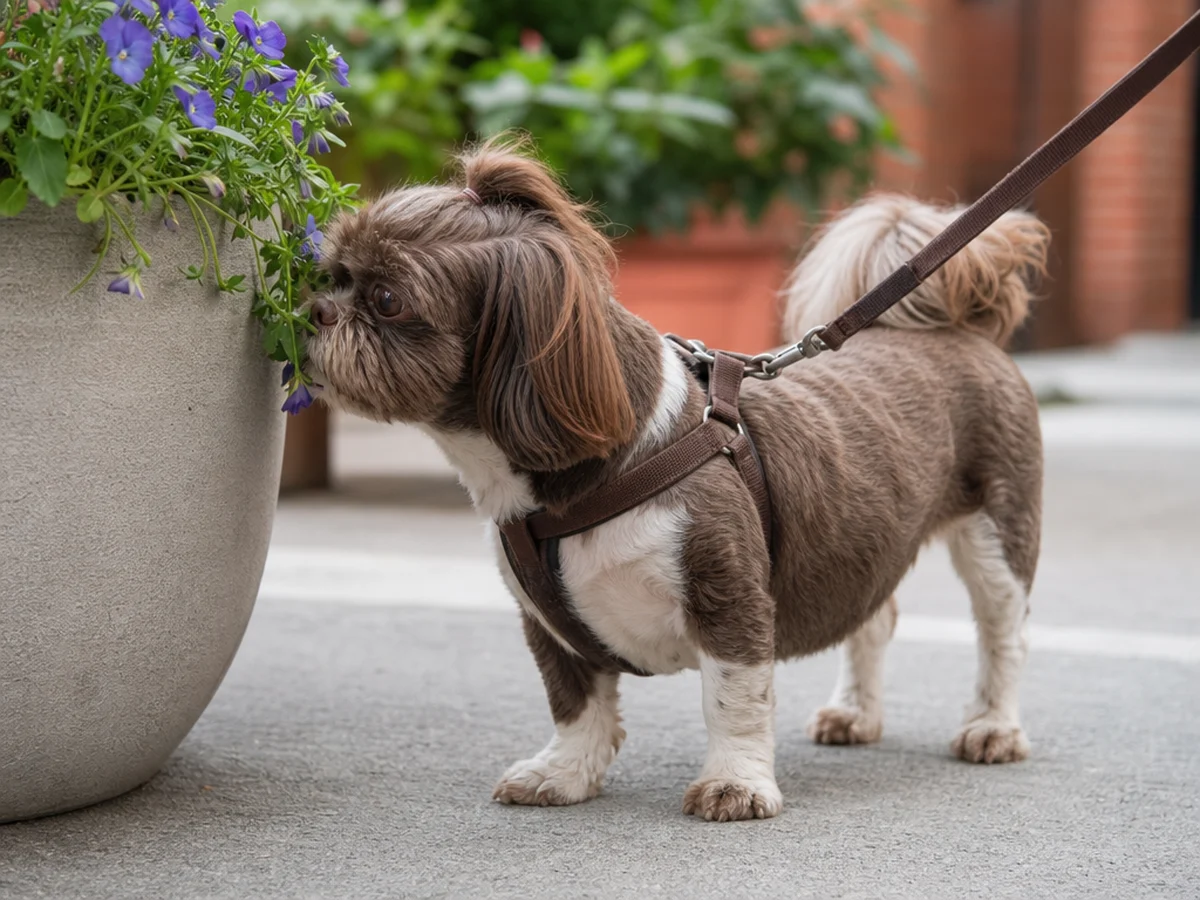
A puppy who leans and tows is usually excited, tracking a scent, or has learned that pulling pays, because every step on a tight leash got them closer to the prize. Flip that lesson so a slack leash is what moves things forward, as the RSPCA frames it. Expect to repeat it on every walk for a while.
Pent-up energy feeds the habit. Many owners describe zoomies, tug and furniture parkour, and they link problem behavior to boredom and too little exercise. A few minutes of indoor play before you leave takes the edge off the first block, so the walk begins with a dog who can think.
Coughing or Honking on Walks
A cough, honk or gag at the end of the leash most often points to throat pressure. The cause may be a collar that is too snug, a harness riding up toward the neck, or a dog hitting the end of the leash at full speed. A harness reduces pressure on the throat but does not erase it, so a dog charging to the end of the leash can still strain.
The moment you hear it, stop moving, let the leash go slack and give your dog time to settle. Then recheck the fit and slow your pace. Excitement, exercise, pollen and sudden temperature changes can also set off reverse sneezing, so mention any repeated noises at your regular vet visits.
Slipping Out of the Harness
A dog who backs out of the harness is telling you the fit is loose, that something frightened them, or both. Refit it snugly, then crouch when your dog backs away and call them to you cheerfully. Moving toward them gives them a reason to come, while straining forward gives them a reason to retreat.
When a Shih Tzu Freezes on Leash
Some puppies sit, plant their feet or back away the moment the door opens. Start leash work by going where the puppy goes, and never drag them. A bad first walk carries over to later ones, so make the early outings fun. The two causes below look alike but need different answers.
The Fearful Freeze
Some puppies are fearless and others tend to be skittish, and a skittish one may freeze at new sounds, unfamiliar footing like grass or concrete, or the feel of the leash itself. Stay beside them and add distance from whatever worries them until they can look at it calmly. Reward that calm look and nothing else, because treats and cuddles given during fear tend to reinforce it.
Practice in the house, then the yard, before the street. If your puppy still refuses, carry them to a quiet spot, set them down and let them walk back toward home on their own. Ending on a win matters more than covering ground.
The Stubborn Sit-Down
A Shih Tzu who sits and looks at you is often just deciding. Owners call these dogs stubborn, and many call the same dog smart, which tells you the issue is willingness rather than ability. Raise the value of the treats, shorten the outing and change the route to keep walks interesting, since boredom and too little exercise often sit behind problem behavior.
Check for plain tiredness too. Owners who give a usual walk length mostly settle around 30 minutes, yet some dogs are done after 10 or 20 minutes and ask to be carried, while others manage far more. Heat is the real limit for a heavy-coated, short-faced breed, so walk early or late and skip hot sidewalk. Our guide to how much exercise a Shih Tzu needs covers heat and indoor games.
In a home with another dog, a puppy may copy an older dog who is not keen on walking, so separate outings can help. Owners with more than one Shih Tzu often report near opposites in energy, so judge each dog by their own stamina. Our article on adding a second dog covers how to blend routines.
Leash Distractions and Other Dogs
Lunging, barking and lurching at dogs, bikes and smells have different roots, and the answer is nearly always more distance and better treats. Being yappy or reactive is not an inborn small-breed trait, so treat it as a skill your dog has not learned yet. Practice around calm dogs of a similar size, because bigger dogs can be intimidating.
Excitement, worry and plain curiosity all produce the same lunge. An excited dog wiggles and pulls toward the target, while a worried one may bark and back away. Either way, work below the point where they lose control, using this routine:
- Spot the other dog, bike or smell before your dog reacts, and add distance until they can look without stiffening.
- Reward the moment they look, and keep feeding while the distraction is in view.
- Turn away before the leash tightens and reward generously when they follow you.
- If they erupt anyway, walk calmly to a quiet spot. A brief time-out works well for a breed that craves company, and you try again with more room.
Smells deserve a deal, not a ban. Release your dog to sniff with a cheerful cue after a stretch of loose-leash walking, so the bush becomes the prize for good manners. Save your best treats, such as egg or chicken, for the busiest corners, since some dogs only listen for something very tempting.
Teaching Loose Leash
A loose leash is built from three habits: you stop when the leash tightens, you reward your dog for staying at your side, and you keep sessions short. Shih Tzu respond best to praise and rewards and wilt under strict voices, so keep your tone light and your timing sharp. Use the same cue word and the same start routine every time, because this breed responds well to ritual.
Indoors First
Begin in a hallway or quiet room with the harness on and treats ready. Work through these steps and end each session while your puppy is still keen:
- Let the leash trail while your puppy plays, then pick it up and follow them.
- When they look up at you, mark it with a word and give a treat beside your leg.
- Take a few steps and reward whenever they walk next to you with slack in the leash.
- If the leash tightens, stop walking and wait without pulling back, then reward and move on once the pulling stops.
Rewarding a dog this small can wear out your back. Put a smear of spreadable treat on a long spoon so you can lower it to your puppy, or build a habit of resting their paws against your leg so you can feed from your hand. Both are approaches suggested for small dogs.
Outdoors Next
Take the same routine to the yard, then a quiet street, in the cool of the day. Keep outings brief and turn for home while your dog is still interested. Fewer, better steps beat a long slog, and an overworked puppy tends to become anxious or unenthusiastic.
Raise difficulty slowly. Pay your best treats at the hardest spots and add distance when your dog's focus slips. At 7 to 8 months many Shih Tzu hit a moody, forgetful stretch. Go back to easier steps with frequent rewards, and see when Shih Tzus calm down for how to ride it out.
A Shih Tzu Walking Plan
This plan puts comfort first and the street second, so the leash holds no surprises when you open the door. It fits alongside our broader guide to training a Shih Tzu, and it gives you something to do each day.
Days 1–7: Introduce the harness with treats, fasten it briefly, and lengthen the time a little each day. Clip on the lead indoors and follow your puppy around the house, rewarding every glance and every slack moment. Brush under the straps afterward and stop while your puppy still wants more.
Days 8–14: Move to the yard, then a quiet street in the cool of the day. Stop when the leash tightens, reward when it slackens, and head home before tiredness shows. Use the distance routine whenever another dog appears.
Before you call the two weeks done, run this checklist:
- The harness goes on without a struggle and leaves no redness or tangles when you brush under it.
- Your puppy walks beside you for a few steps with the leash slack, indoors and out.
- You know how long your own dog's walks last before interest fades, and you stop before it does.
- Your vet hears about any coughing or noisy breathing at the next regular visit.
A Shih Tzu who wants to be with you will walk beside you when the harness spares the throat, the pace suits their stamina and every loose step pays off. Keep walks short, cool and rewarding, and the leash becomes the start of the best part of their day.
 Puppy trainingShih Tzu Puppy Training Timeline: From 12 Weeks to Adolescence
 Exercise and jobsCan a Shih Tzu Be a Service Dog? Therapy and Support Roles
 Training basicsShih Tzu Temperament and Personality: What It Means for Training