 Shih Tzu
10 Shih Tzu training topics
Every common Shih Tzu challenge, with first steps and guides to read.
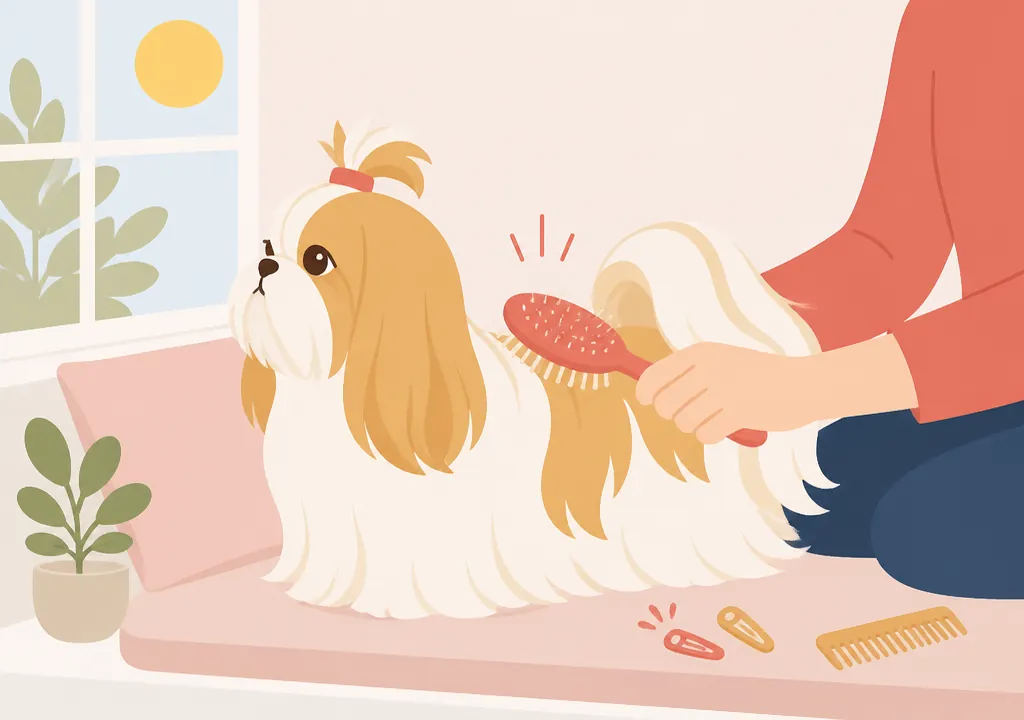
Grooming and brushing
A calm daily brush for a long coat.
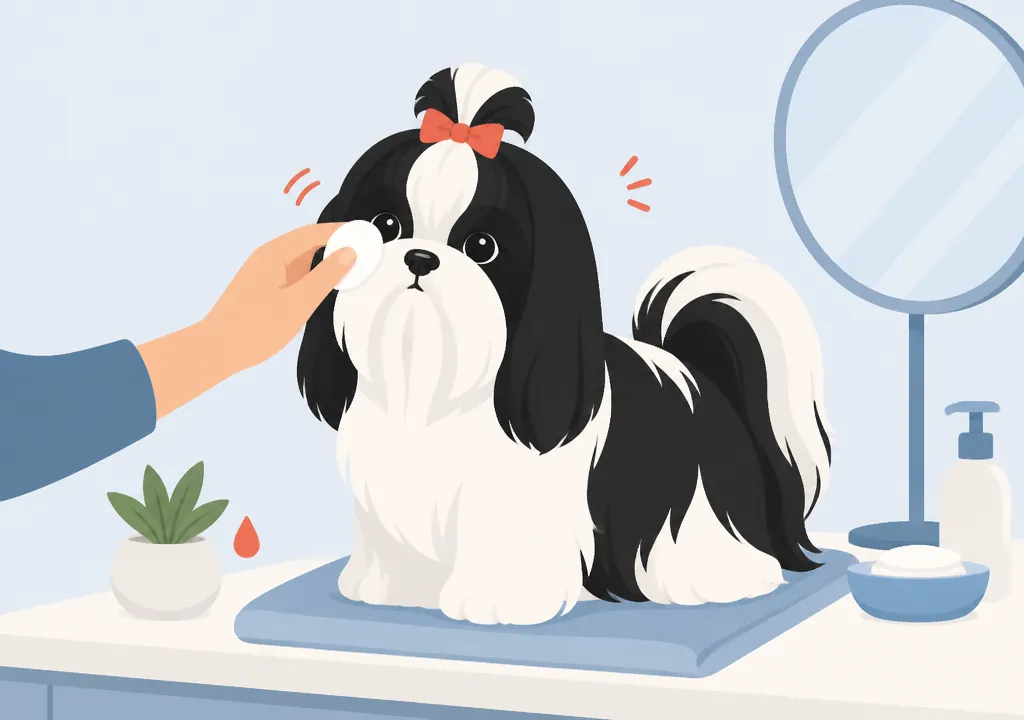
Face and eye care
Clean eyes and a tidy mustache.
Clean eyes and a tidy mustache start with a puppy who accepts hands on their face, so handling begins on day one. The coat mats without daily work, and the breed's charm talks owners out of routines.
The full guide is the first week as a training plan, from crate to brushing.
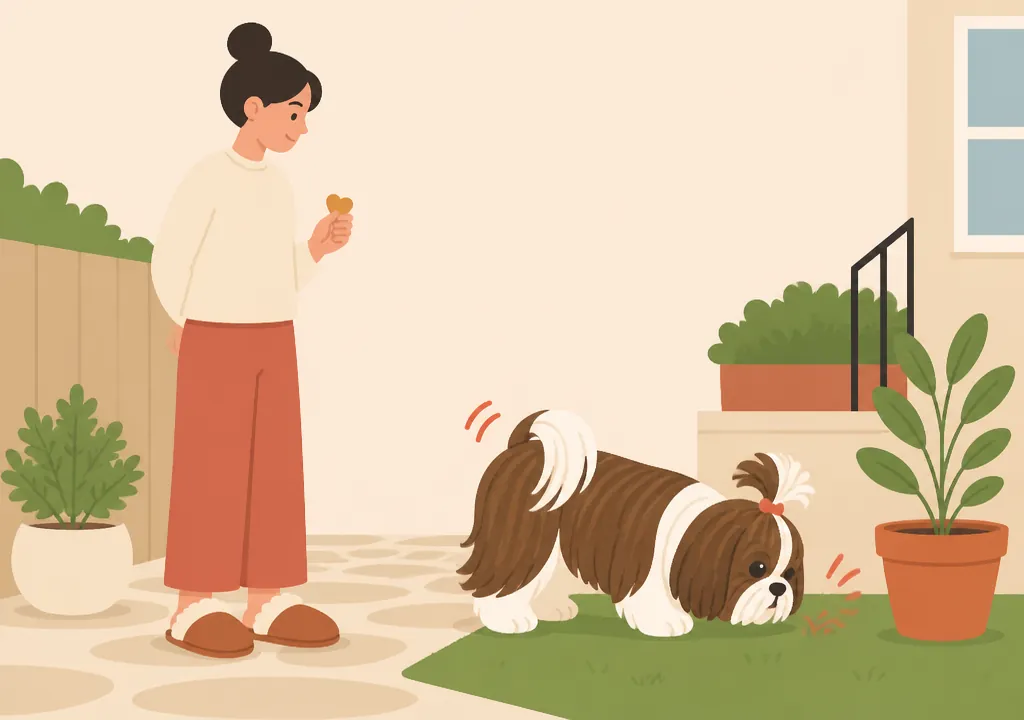
House training
A clear routine for a small dog.
Shaky bathroom manners can follow a Shih Tzu for years when the first weeks slide. The breed trains best in short, upbeat, reward-based sessions, because these persuasive lapdogs talk owners into dropping the rules.
The full guide is the breed's complete training plan, from housetraining to the first two weeks.
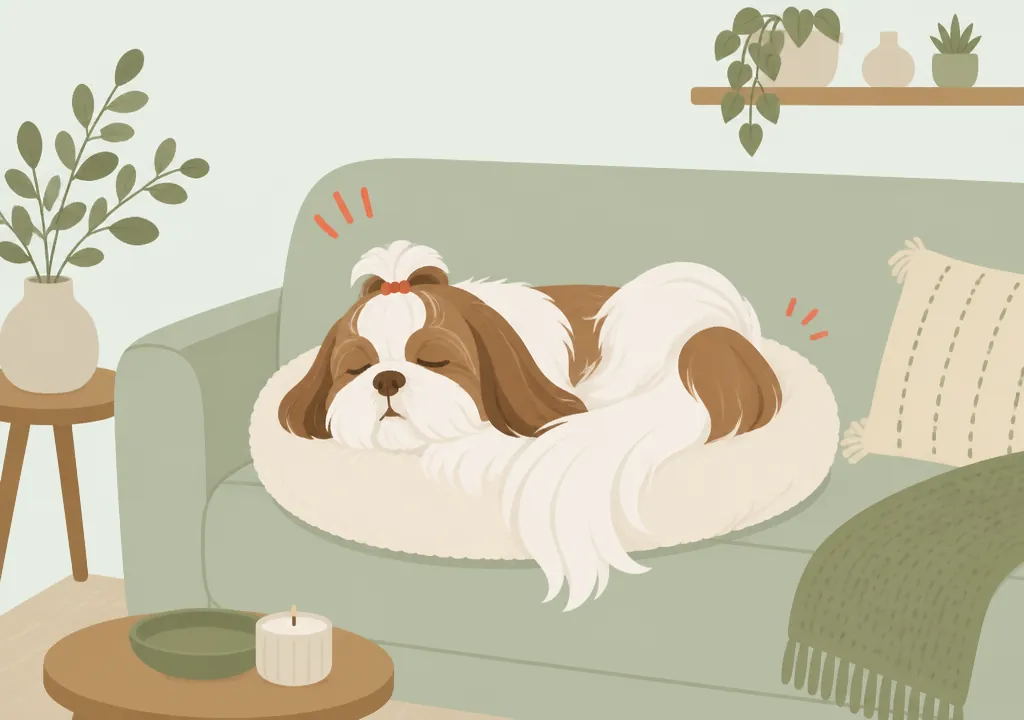
Time alone
Help a lap dog relax.
Most Shih Tzu puppies go home at around 12 weeks, and nobody can honestly say how many nights until the crate means a full sleep. The routine around the crate is what you control.
The full guide covers crate sizing, bedtime meals, releasing a noisy puppy and gear for a long beard.
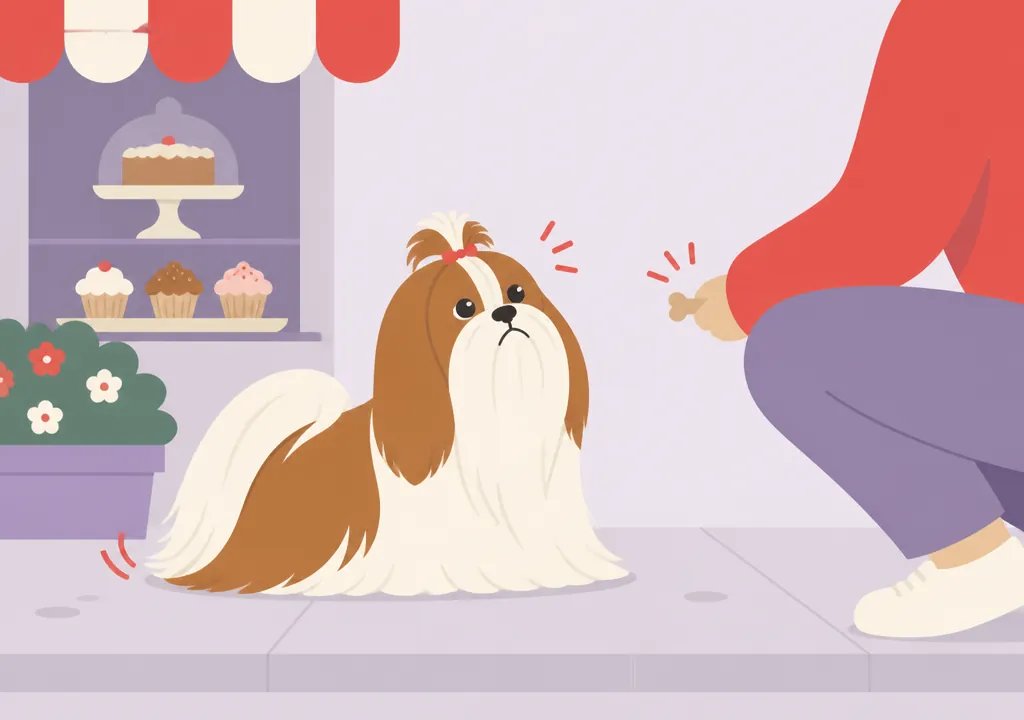
A stubborn streak
When a Shih Tzu says no.
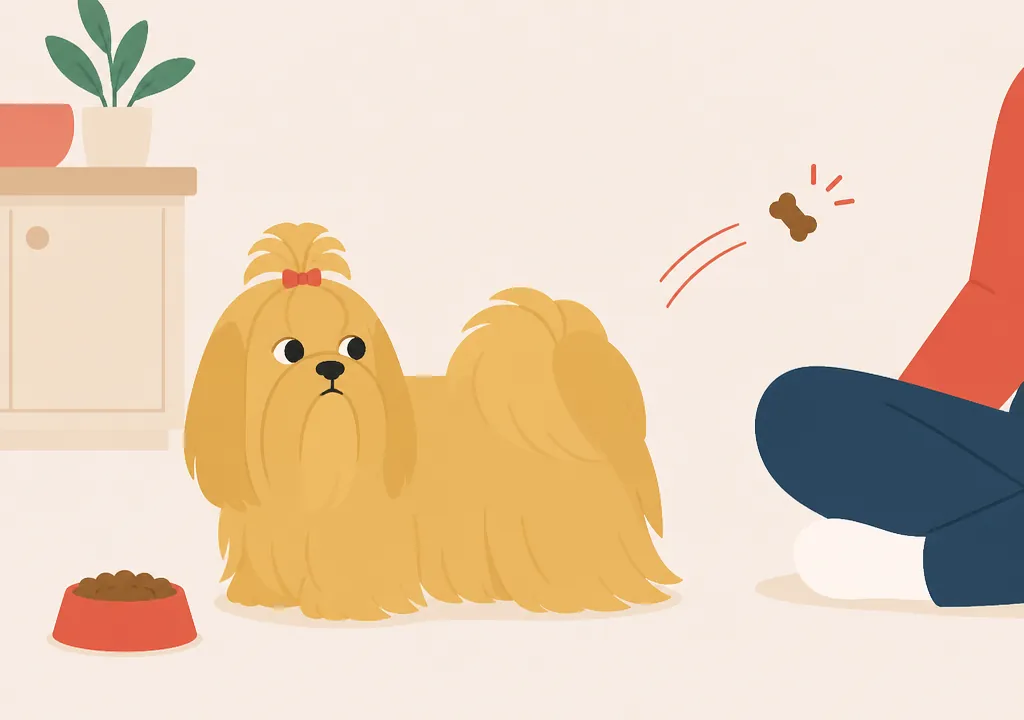
Guarding food
Trust around the bowl.
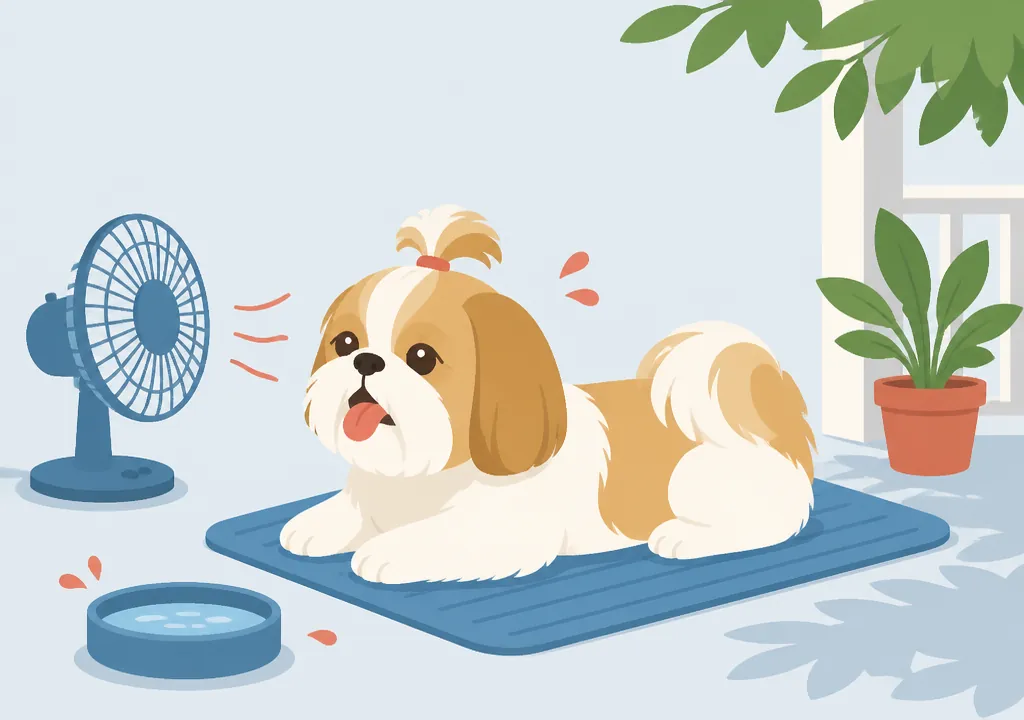
Struggling in the heat
Keep a flat face cool.
For a small, long-coated companion a 3 out of 5 for energy means a daily walk, play at home and no marathons. At the wrong hour, a heavy coat plus a short face turn risky.
The full guide covers the 15 to 20 minute question, indoor games, walk timing and coat care.
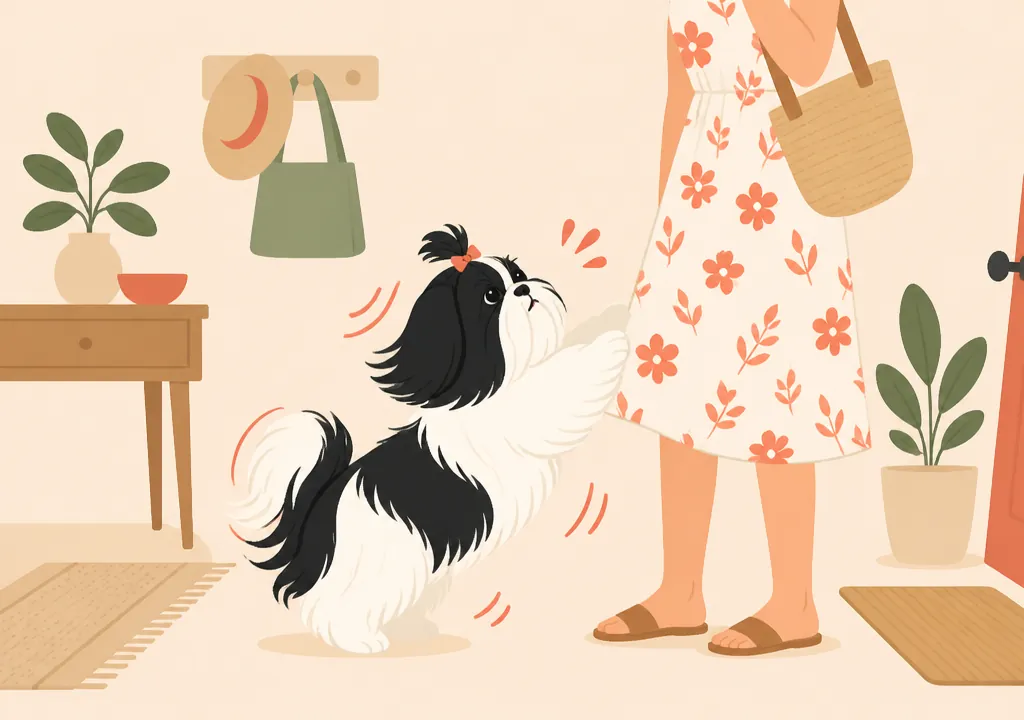
Jumping up
Four paws on the floor.
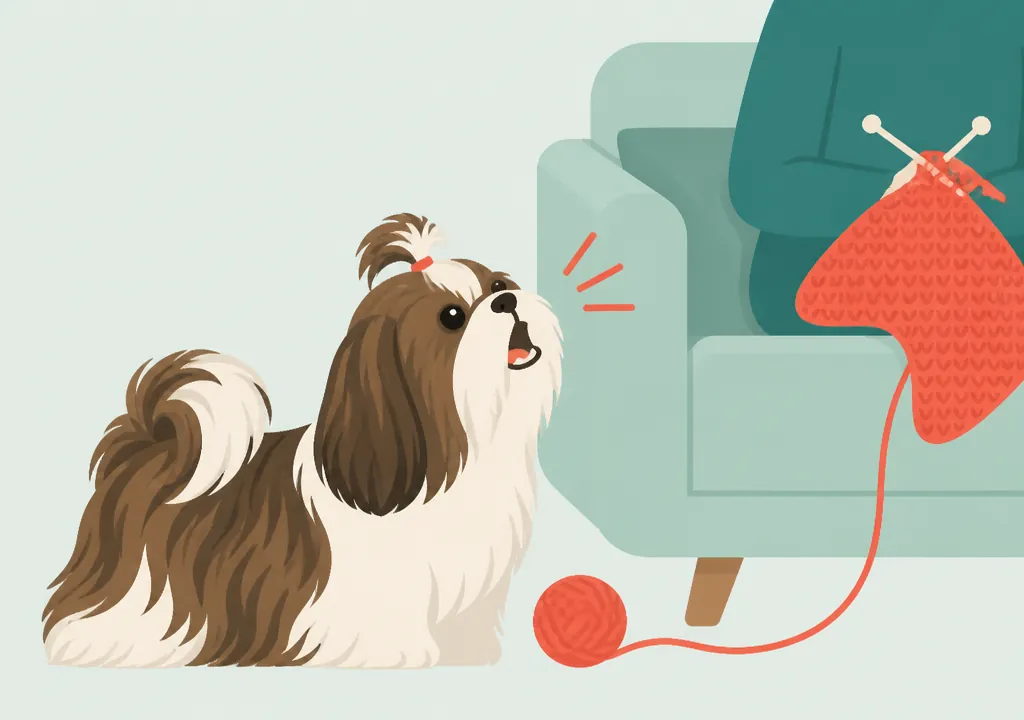
Barking for attention
Quiet ways to ask.
Barking for attention is what a clever Shih Tzu does once it works. The AKC rates the breed 4 of 5 for trainability and says people-oriented dogs do best on praise, so pay for quiet.
The full guide covers what smart means for a Shih Tzu and why treats are pay.
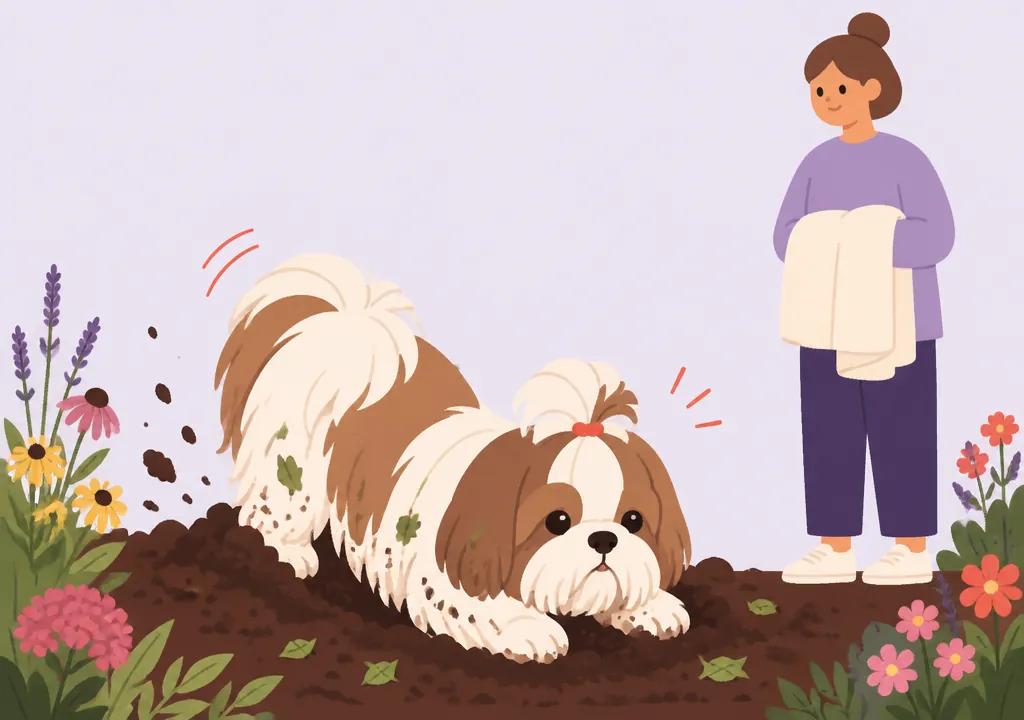
The teenage months
Patience while a puppy grows up.
Accidents and excitability often return at 5 to 7 months, and many Shih Tzu only calm down around 1.5 to 2 years. Breeders keep puppies until about 12 weeks, so yours may arrive partly trained.
The full guide runs from pickup to adolescence, with first skills, classes and holding steady.