 Shih Tzu
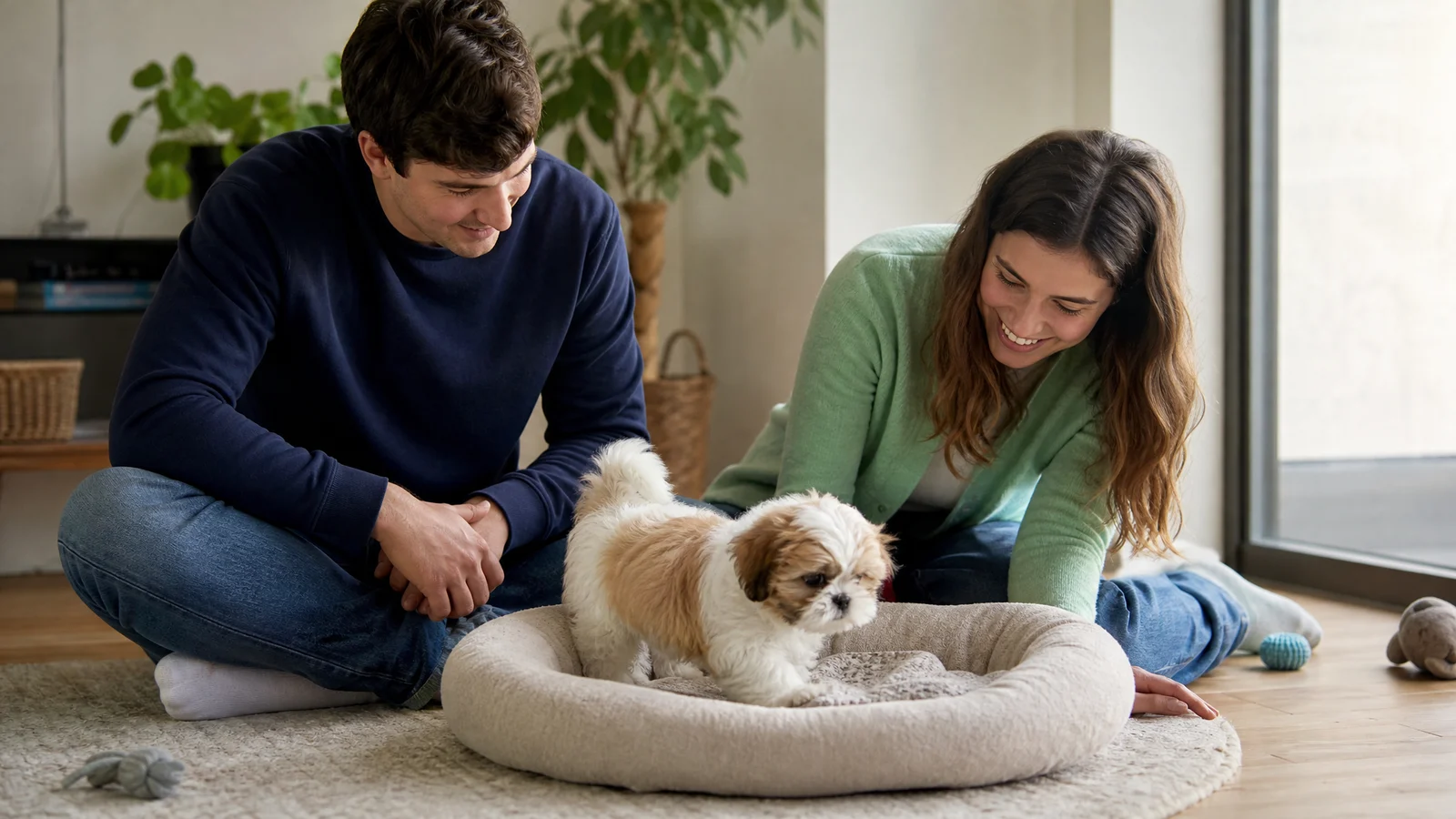
A Shih Tzu puppy's first week differs from standard new-puppy advice in three ways. The crate sits right beside your bed instead of down the hall, handling and brushing start on day one, and a schedule replaces free run of the home. Each change answers something specific to this breed: a companion dog who struggles when left alone, a coat that mats without daily work, and a charm that talks owners out of routines.
This guide covers the first week as a training plan, from the crate and the night trips to potty timing, early brushing and the things worth skipping, then looks at how the routine grows over the coming months. We follow one example setup all the way through so each step has a place in the day.
Done well, these habits give you a puppy who settles, sits for a brush and trusts your hands. Done badly, they become a dog who cries at night and dodges the comb.
Our Example Shih Tzu Puppy at Home
Everything below follows one typical setup. Our puppy is ten weeks old and newly home in an apartment with two bedrooms, two adults, a gated kitchen doorway and a short walk to a patch of grass.
The breed club recommends that puppies stay with the breeder until they are at least 12 weeks old, by which age they weigh about 6 pounds. Our example puppy is a little younger and smaller, which is why we chose them: the smaller the puppy, the more meals and warmth matter. If yours arrives at 12 weeks or later, ask the breeder what the puppy already knows about the crate and potty, and keep that routine.
The day runs on a rhythm of eat, potty, a little play, nap, repeat. A consistent schedule for eating, sleeping and playing helps because a puppy this age can't predict what comes next, and the clock does it for them. Meals are small and regular, three or four a day, since Shih Tzu puppies are vulnerable to hypoglycemia, or low blood sugar, especially under 3 months.
Puppies with this problem often just seem "not right", so know the signs:
- Loss of appetite, extreme lethargy or general weakness.
- Lack of coordination, trembling or muscle twitching.
- Unusual behavior or dilated pupils.
- Seizures, stupor or coma, which are emergencies.
Any one of these, or a puppy who simply seems off, means a call to the vet that day, and a warm, calm ride there. Regular vet visits after that are part of the routine too.
This is general information, not veterinary advice. Check with your veterinarian about your puppy's meals, about low blood sugar and about anything that seems wrong.
The Puppy's First Nights Beside Your Bed
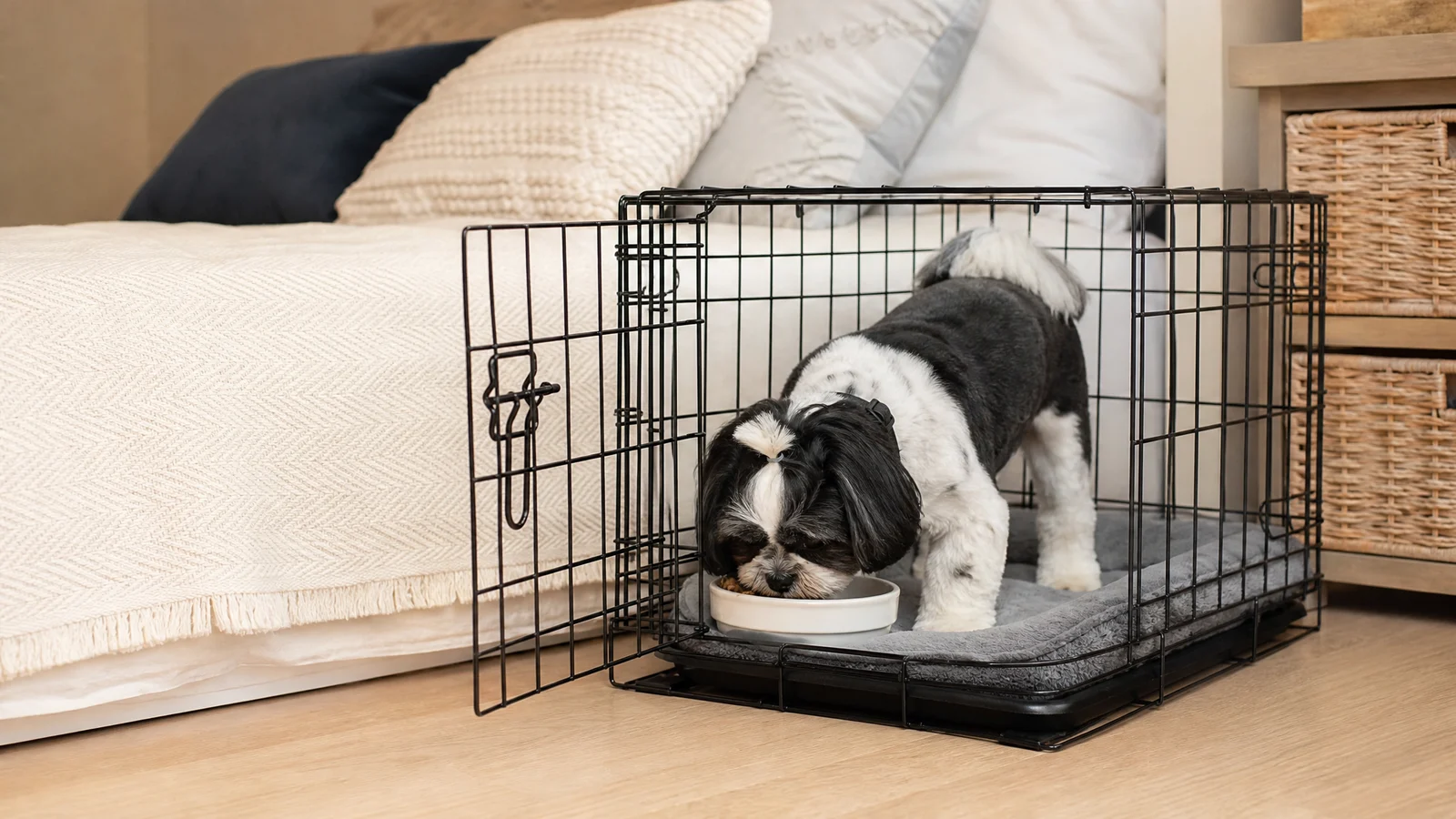
At ten weeks, a puppy has just lost their littermates, and the first night is the first time nobody is touching them. The crying that follows is a social animal asking where everyone went, which is why the crate goes right beside your bed. Standard advice is to sleep in the same room for the first few nights, and for a breed made to be a companion, that reasoning is stronger still.
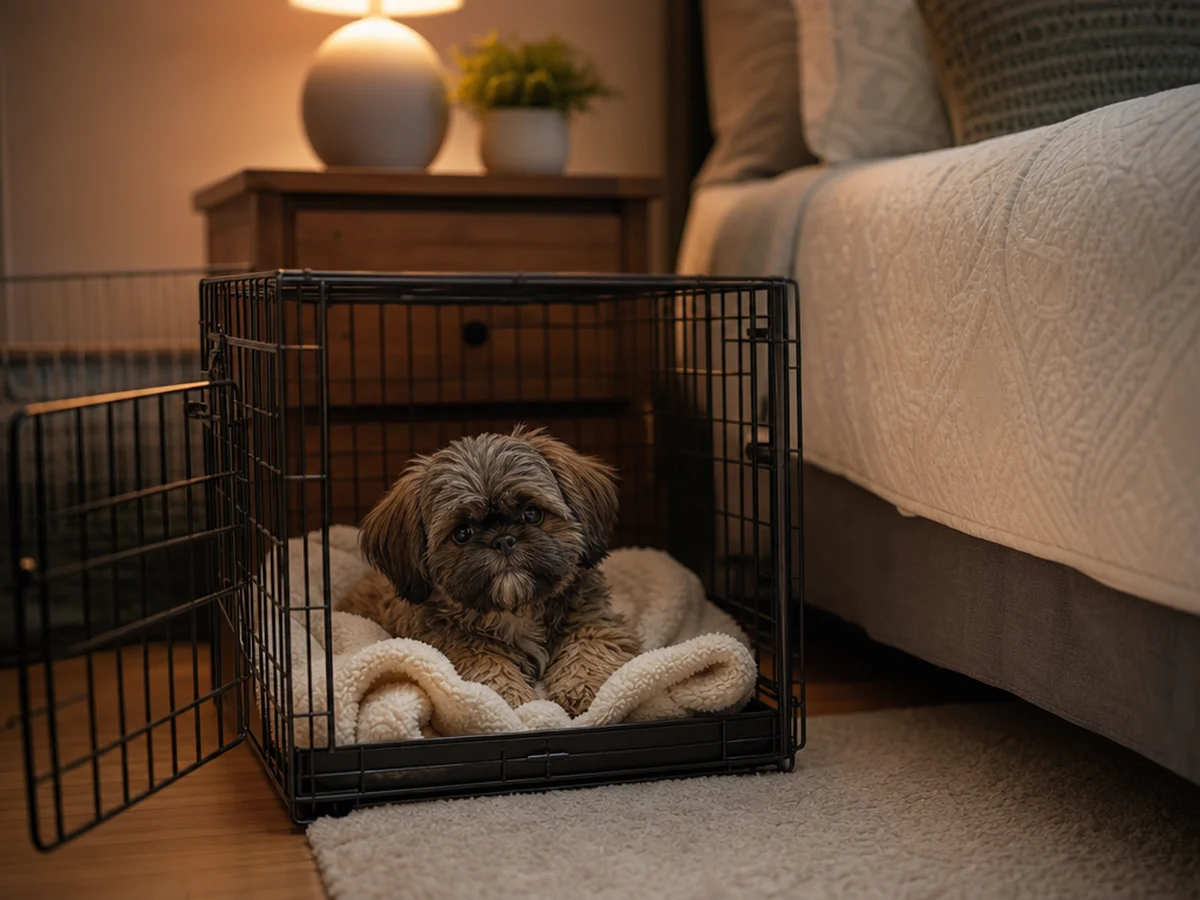
Many owners report that first-night crying often stopped once the crate was moved that close. Some rested a hand against the crate door, and some tucked in a T-shirt they had worn so the crate smelled like them. We have trained this breed for many years, and we agree with what they describe: closeness settles a puppy faster than distance does.
Keeping Night Trips Dull
Plan on getting up every 3–4 hours early on, and keep night trips boring with dim lights, no chatting and no play. A dull trip teaches the puppy that nighttime is for toilet and sleep, not a party, and the trips fade on their own as the bladder grows.
In the example, every night begins the same way: a meal in the crate and a tiny treat at bedtime to invite the puppy in. The first small-hours cry brings a quiet trip to the grass and straight back to bed. Some puppies sleep through within days, while others still cry in the small hours or soil the crate, so judge by direction, not by one night.
Answering Crying Without Giving In
Common advice says to ignore all crying so the puppy learns to settle. We would split it. A small-hours cry may be a real need, so answer that with the boring trip. Crying for company is different: wait for a quiet moment before opening the door, because a puppy let out mid-protest learns that protest works. In practice, that means answering a likely potty need calmly and waiting for quiet before you open the crate door.
A minority of puppies panic outright in the crate. If that is your puppy, stop pushing: shorten crate time, sit next to the crate, and tell your vet and breeder, since a crate only helps a puppy who sees it as a safe space. Don't leave the puppy shut in for more than a few hours by day. Our crate training guide covers sizing and the first nights in more detail.
When Does the Puppy Go Out to Potty?
More often than feels reasonable, at least at first. At ten weeks, a puppy gives little warning between needing to go and going, so the schedule has to supply the warning. Owners say what worked was frequent trips on a clock, each followed by an immediate reward, and the example day has them at these points:
- First thing on waking, straight from the crate to the grass patch.
- After every meal and every drink.
- After play and after each nap.
- Last thing before bed, followed by the bedtime treat in the crate.
The puppy is carried down, because small puppies climb stairs before they can come down safely, and any stairs at home get a gate.
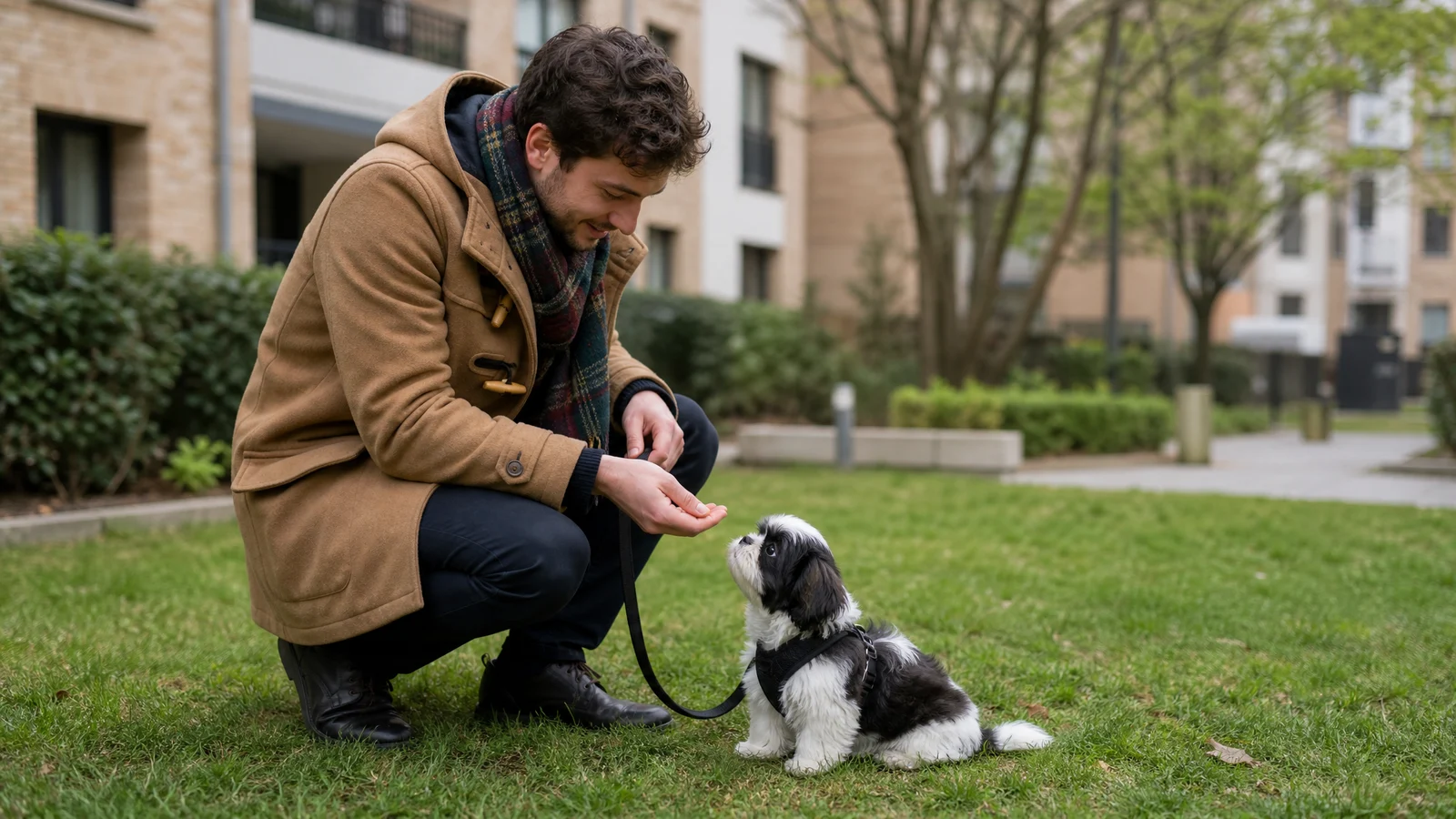
Reward at the spot, not at the door. When the puppy finishes, say a marker word like yes, a brief sound that signals a treat is coming, and hand over the treat on the grass. Dogs link a reward to what they just did, so a treat after the walk back rewards the walk, not the potty.
Between trips the puppy is watched, gated into one room or in the crate. Puppies are naturally clean and learn to hold it until released, but only for a few hours at a time. Accidents often land on beds and couches, so the apartment opens up room by room once the schedule is working. Schedule first, freedom second.
Owners split on pads: some found a backup pad helped, others skipped them or watched their dog come to dislike them. Our pee pad training guide covers the choice.
Expect months, not days. Some puppies catch on fast, others still have accidents at 6 to 7 months, and setbacks after progress are common. Our potty training guide carries on well past the first week.
Handling and Brushing a Young Shih Tzu Puppy
Grooming is daily training in this breed, and the first week is the cheapest time to start. Daily grooming is critical whether the coat is in full length or a puppy clip, because mats are painful to remove however carefully you work, and about three weeks of total neglect can mean a shave to the skin.
A puppy who has learned to accept touch avoids all of that. Owners who handled, brushed and cleaned the eyes of their puppies from early on describe dogs who sit still for it or even love it. The method is to ask for a little at a time, so the puppy feels they are earning the treat rather than being made to hold still.
Handling Steps Before Any Tools
Work through these in order, moving on only when the puppy is relaxed, and end each session while they are still calm:
- Run soft hands over the puppy with a soothing voice until they lean into the touch. Once they accept touch all over, move on to handling body parts: lifting and holding ears, lips, paws and tail.
- Encourage the puppy to lie on each side for a few seconds, with gentle belly tickles. This is a vulnerable position, so a calm few seconds is a win.
- Hold one foot for five seconds, then give a tiny treat and praise. Repeat a little longer each time and thin out the treats gradually.
- When the puppy accepts 15–30 seconds of handling without squirming, move on to the nails, one nail at a time.
Don't turn any of this into a battle of wills. If the puppy pulls away, go back a step. A fight teaches them that hands mean trouble, while a happy session makes grooming calming for both of you.
The First Brush and Face Wipe
Start with a few gentle strokes on the back and chest, a treat, and stop. Add the face, with careful cleaning around the eyes, then the feet and any other job the puppy likes least, a little at a time over several days. Owners of fidgety dogs say pacing is what worked: breaks and treats during a groom, and splitting it over more than one day.
These tiny sessions pay off later. Many Shih Tzu change coat at about 10–12 months and seem to mat faster than you can brush, and a dog who already accepts the comb gets through it. Practice at home before the first groomer visit too, since groomers also require up-to-date vaccines.
What Do We Skip in the Puppy's First Week?
Quite a lot, and skipping on purpose is part of the plan. Visitors come first: the example puppy meets the two adults and perhaps one calm friend at a time, with no party, because too much newness can leave a small puppy overwhelmed instead of curious. Socialization still matters, since the socialization window runs from 3 to 14 weeks, but a few gentle experiences beat a crowd.
Long outings wait too. Ask your vet which places are safe before vaccines are finished, and until then offer quiet sights in small doses, since a tired puppy in a loud place learns little.
Big training goals wait most of all. The week's goals are the crate, the potty clock and tolerating hands, with a name and a marker word as extras. Long stretches alone wait as well. A companion breed doesn't fare well left alone for long, so build time apart very gradually, from a few seconds behind a door, with no big fuss on leaving or returning.
A minority of new owners describe feeling overwhelmed in the puppy months: worrying about spoiling the puppy, feeling frazzled, or feeling like a failure many weeks in. Cutting the week down to a few repeatable parts is the answer, and this routine is small enough to keep going on a tired day:
- Meals and potty trips on the same clock every day, since the schedule does most of the work for you.
- One short handling and brushing session, ended while the puppy is still calm.
- Several naps in the crate or gated area, because puppies sleep most of the day and need to.
- One calm meeting with a person or a new sound, then home.
Notice what is missing: perfection. A puppy and an owner who repeat a small routine do better than a pair chasing everything at once.
Week Two and Beyond for a Shih Tzu Puppy
Nothing about the routine changes on day eight, and that is the point. The potty gaps stretch as the puppy holds on longer, the handling sessions run a little longer with fewer treats, and the crate beside the bed keeps doing its quiet work.
Potty reliability arrives over months. The age at which owners call a dog reliably trained varies widely, and littermates can differ. Teething, which can last to about 8–10 months, brings chewing and sometimes a dip in appetite, so keep the puppy calm and cool and keep the meals regular.
Around 7–8 months comes an adolescence of about two months. The puppy can turn moody and stubborn and seem to forget earlier training. It passes, but it is also when rehoming is most likely, so this is a critical time for reinforcing the training you built. Owners describe energy and impulsiveness easing late, from around a year and a half to nearly 2 years.
Coat comfort comes the same slow way. When the coat changes at about 10–12 months, the dog who learned in week one to accept a brush gets through it. The effort pays back for a long time, too: many owners describe seniors who stay playful into their teens, with several reaching 15 to 17.
Keep the small routine going, cheerful and patient, and the first-week habits grow into the settled companion this breed was bred to be.
 Training basicsHow to Potty Train a Shih Tzu: Schedule, Rewards, Patience
 Training basicsHow to Train a Shih Tzu: The Complete Guide
 Training basicsCrate Training a Shih Tzu: Crate Size, First Nights and a Dry Beard