 Shih Tzu
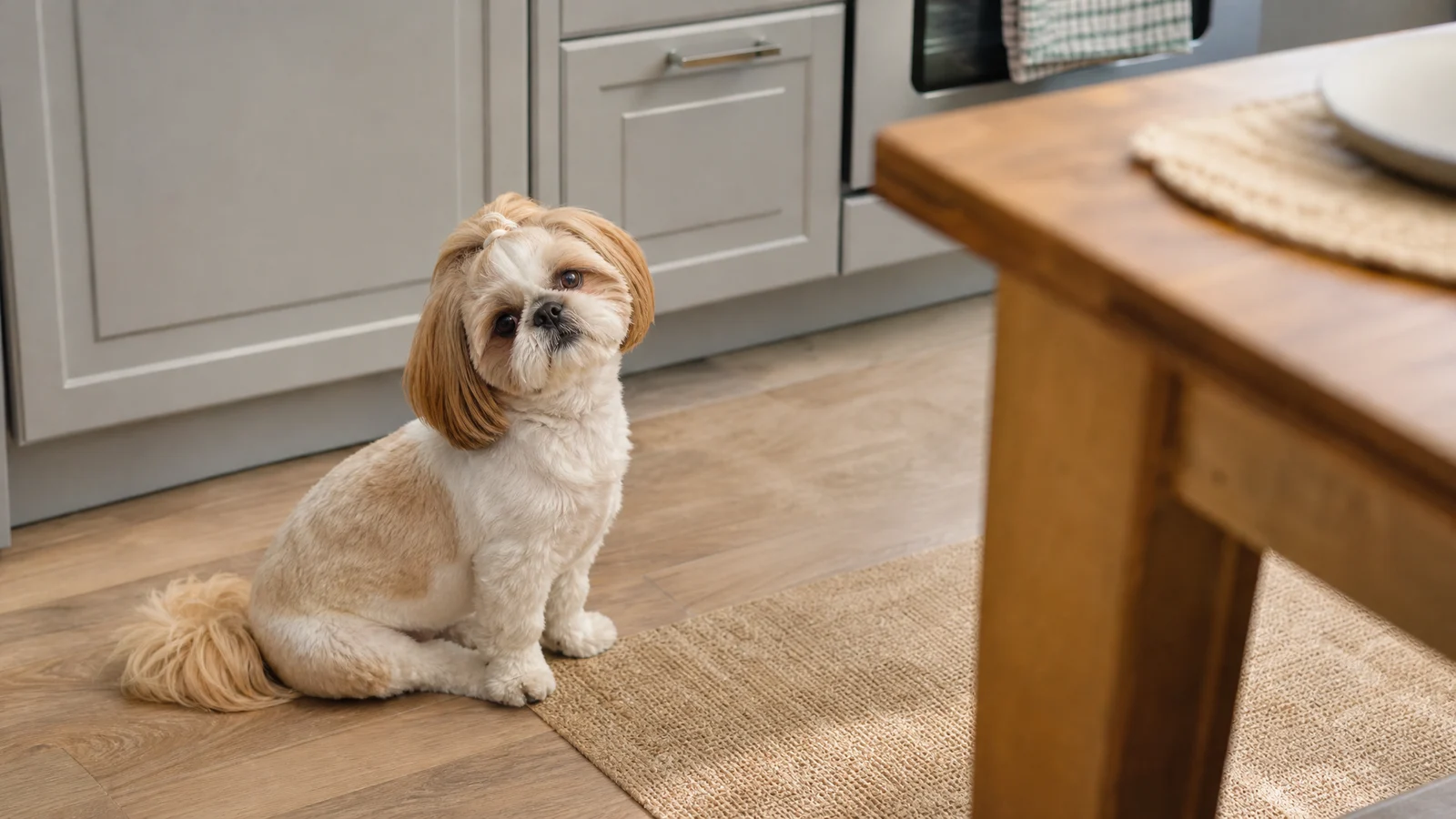
A Shih Tzu trains best with short, upbeat, reward-based sessions that start early and stay consistent. The breed-specific reason is temperament: these are people-oriented lapdogs that thrive on attention, and their charm is so persuasive that owners quietly stop enforcing the rules.
Handled well, that charm gives you a funny, tuned-in dog who wants to work with you. Handled badly, habits from the first weeks, such as begging, matted coats and shaky bathroom manners, can follow a dog for years. We reviewed 1,152 Shih Tzu owners' first-hand accounts while planning this guide.
This article looks at where the breed's instincts come from, why charm is the real obstacle, what a missed cue means, and where housetraining and the first cues belong. Read on to learn how to reward, how to practice, and how to spend your first two weeks.
A Palace Companion Lives in Your Shih Tzu
Notice where a Shih Tzu settles and you learn most of what matters. Owners describe dogs who perch like cats on sofa arms and cushion tops, claim the owner's pillow, and sleep on or just above the owner's head instead of at the foot of the bed. A few say theirs skip the sofa arms but claim laps or the best seat. Every version has the same goal: as close to a person as the furniture allows.
That closeness is the breed's whole nature. Shih Tzu are playful, affectionate and outgoing, adapt readily and love being around humans. Breeders call them true lapdogs that thrive on attention, friendly with everyone yet inclined to adore one person in the home. At 9–16 pounds and 8–11 inches tall, they live at lap height, which changes how you teach.
Development follows the same logic. Puppies stay with their breeder until twelve weeks old, so the earliest handling, sounds and people happen before you meet them, and your job is to continue that work. Some puppies are fearless and others skittish, so let the puppy's confidence set the pace and keep every new thing pleasant and gradual. Our guide to bringing home a Shih Tzu puppy covers the first week.
For training, this nature is a gift with a catch. A dog who wants you near will work for your voice, your hands and your approval, so nothing elaborate is required. The catch is that attention is the currency, and a dog who receives it free has no reason to earn it. Sit on the floor or raise the dog onto a couch when you teach, since small dogs find people leaning over them uncomfortable.
Charm as the Real Training Obstacle
A puppy tilts their head at the edge of the kitchen, the house rule says no scraps, and a piece of chicken changes hands anyway. Breeders know of homes where that pattern ended with a chubby dog who was not fully housebroken, woke the owner at 5 a.m. and had charmed their way out of grooming until matted. Our position is plain: the obstacle is rarely the dog's mind. It is the owner's resolve.
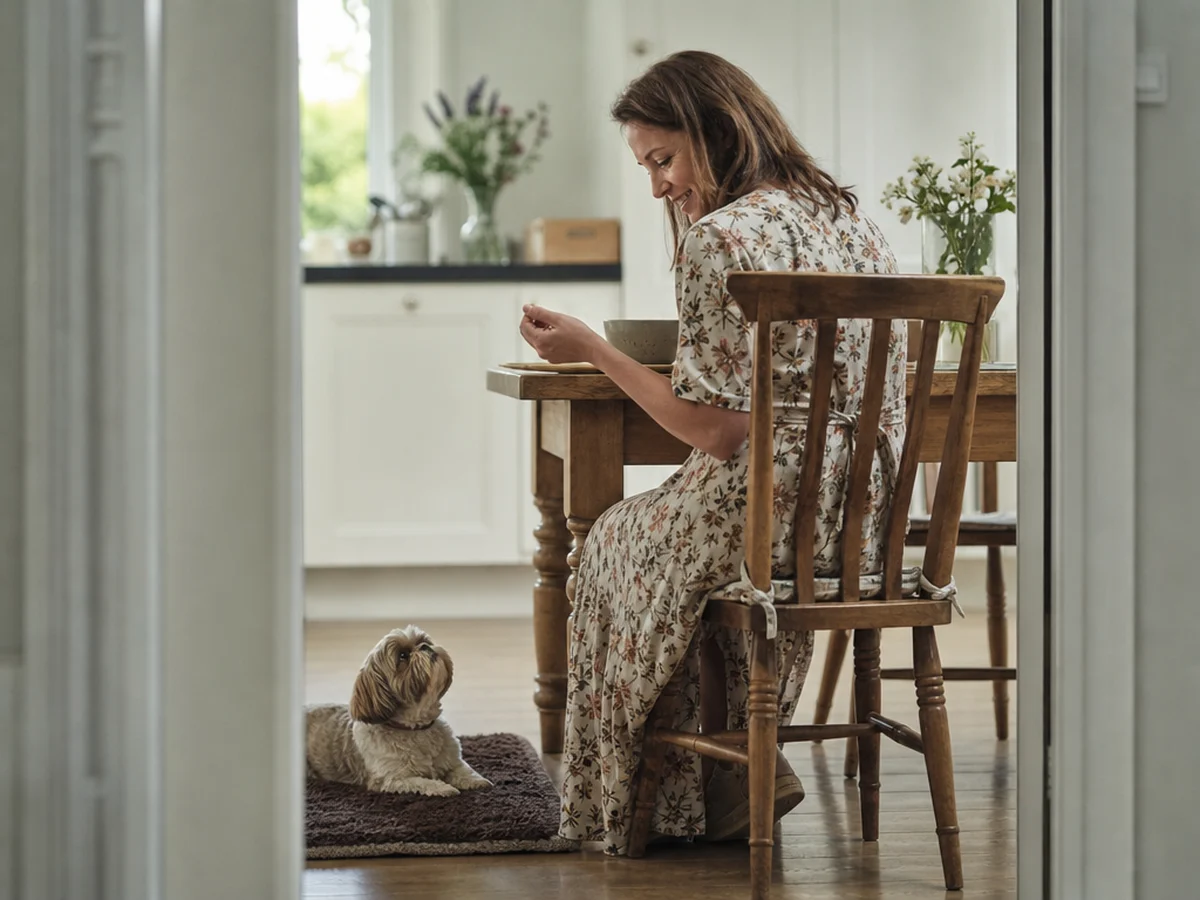
The risk is well documented, since letting a Shih Tzu get their way can lead to a difficult pet. Each given-in moment teaches the dog that a cute stare beats a cue. Breeders add that Shih Tzu do what they want but respond well to ritual, so predictable routines work better than willpower. Decide the rules once, share them with everyone in the house, and answer the head tilt with a cue and a reward instead of a free pass.
Holding the line does not mean being cold. Your Shih Tzu will love you just as much if you teach them to be well behaved. They still get what they want, they simply earn it. Frame each task so the dog feels they are getting something good, and a breed that loves to manipulate will perform eagerly, as long as you ask for a little at a time.
Why Does a Shih Tzu Ignore Training Cues?
Call a Shih Tzu who is busy with something more interesting and many owners know what follows: the dog glances away, or acts as if the word has no meaning. Owners describe dogs who look away when called, act dumb when they don't feel like it, and need far more consistency than other breeds they have trained.
We read this as rarely defiance and almost never a lack of brains. Some of the same owners call the dog smart, even brilliant, in the next breath, which puts the gap in willingness rather than ability. Trace a missed cue and you usually find one of three causes: attention was elsewhere, the reward was weaker than the competition, or the timing was off.
Common advice says a stubborn dog needs a firmer hand. The evidence points the other way. Praise and rewards work best for this breed. A dog who ignores you needs a better prize and a smaller request, not more volume. Each cause has a fix:
- Get attention first: say the name, wait for a glance, and only then give the cue, so the dog knows the question is meant for them.
- Raise the prize for hard jobs. Some owners say their dogs comply only for a very tempting treat, so save the best food for moments with the most competition.
- Mark the right instant with a word such as "yes," and deliver the treat within 3 seconds so the dog links the reward to what they just did.
- Practice in easy places first, and never call the dog away from something they enjoy more, such as play, while the skill is new.
- Shrink the request. If a sit-stay falls apart, ask for a sit, then a slightly longer sit, and add the stay a little at a time.
Age plays a part too. Some owners say puppy excitement got in the way of lessons until the dog was closer to a year old, and a few find basic commands arrive slowly or not at all. That calls for patience, not for dropping the lessons. For trouble beyond manners, see common Shih Tzu behavior problems and how training helps.
When Two Shih Tzus Learn at Different Speeds
Owners with more than one Shih Tzu often describe near-opposites under one roof: one quick and eager, another who cannot hold a sit-stay, one tireless on walks and another finished early, one safe off leash and another never. Many wonder how such different dogs are the same breed.
Train each on their own timeline and never grade the second dog by the first. The slower learner needs more repetitions and richer rewards, not a lower opinion of them. If a puppy copies an older dog who dislikes walks, separate outings help.
Training With Praise and Treats, Not Punishment
Some owners say their Shih Tzu wilts under a strict voice and does far better with gentle encouragement, and a few use song and petting as the reward. That fits the breed. Shih Tzu are extremely people-oriented and eager to please, so praise and rewards tend to work best, harsh techniques go badly, and new behaviors should be introduced bit by bit.
The wider evidence agrees. Behavior specialists note that training works best when it teaches the dog what to do, and in a study of 92 companion dogs, dogs from reward-based schools showed fewer stress behaviors and smaller cortisol rises after training. A sensitive dog who shuts down learns nothing, so the warm approach is also the efficient one.
Rewards need not be fancy, because giving a dog something they really like, such as food, toys or praise, makes a behavior more likely again.
Owners say food is what makes training work: favorite treats, small kibble, egg, chicken, or a treat paired with praise. Several name fruit and vegetables among top rewards, such as peas, carrots and green beans, and some hand frozen green beans to teething puppies. That is owner experience rather than a rule, and dogs differ.
Keep treats tiny, about pea-sized, so you can reward often without overfeeding a 9–16 pound dog, and count them toward the day's food. Pair every treat with praise, since your voice is a prize this breed values highly.
Every dog's food needs differ, so ask your veterinarian which treats suit your dog and how much of the daily ration they should take up before you change what your dog eats.
For the rare moment when manners slip, the mild consequence breed writers favor is a brief time-out. Because Shih Tzu crave human company, a short separation from you after unwanted behavior carries real weight when delivered calmly. Return quickly, ask for something easy and reward it.
Where Does Housetraining Fit Into Training?
Owners describe house training as slow, hard work, often calling the dog stubborn: months of effort, a dog who learns the words for walk and treat at once but needs many repetitions for going potty, and puppies still soiling at 6 to 7 months. Of the owners we reviewed who wrote about potty training, crates and sleep, 10% described house training as slow, hard work.
So it belongs at the very start, running beside everything else rather than waiting its turn. Breeders say Shih Tzu are often considered hard to housebreak, and most are not reliable when left alone until about 8–10 months. Expect weeks to months and plan for setbacks. Some owners say their dog simply grew out of accidents as they matured.
The method is prevention plus reward. Supervise or confine the puppy until they have gone four to eight weeks without an indoor accident, and offer a trip out about every two or three hours and after waking, meals and play. Walk them on leash to the same spot, and reward every success at once with praise and a really good treat. A bell hung at dog level by the door gives them a way to ask.
Indoor options are legitimate for this breed. Breed writers describe Shih Tzu trained to paper, a litter pan or a covered litter box for life alongside outdoor trips, which helps in apartments. Owners split on pads, so pick one plan and keep it consistent.
If a reliably trained dog starts having accidents or asking out more often, call the vet before assuming a training problem. Our guide to Shih Tzu peeing in the house covers beds, couches and setbacks in detail.
Short Shih Tzu Training Sessions and First Cues
Owners who report progress describe short, repeated, positive sessions, and say new things take a lot of repetition. Breed writers put it as less is more: it is far easier to tone down an exuberant puppy later than to restore the spark an over-drilled puppy loses. Work in brief bursts with tiny treats, from the floor, and stop while the dog is still keen.
A session has a simple shape: ask for one behavior, mark the instant it happens, reward, and finish on something the dog already does well. Add a cue word only once the behavior is dependable. Fit sessions into a steady daily schedule for meals, sleep and play, and use our Shih Tzu puppy training timeline to see what to add when.
Name and Eye Contact
Say the dog's name cheerfully and reward any glance. This teaches that your voice always predicts something good, which a people-focused breed takes to quickly. It is also the cue that makes all the others possible, so practice it in every room before you ask for anything harder.
Sit and Wait at Every Door
Ask for a sit before any door opens, then add a wait: hold a treat near the nose, say the cue, and open the door a little. Reward if the dog stays. If they dive, close it and start again. Secure doors and gates are the first line of defense against escapes, and a trained wait is the second.
Come When Called
Because most Shih Tzu like to be near you, recall is easy to start. Run away, turn and call once the dog is already following, then reward with a treat, praise and cuddling. Practice first in a safe, enclosed, quiet area. A long, lightweight lead trailing from the dog can help, but never leave them unsupervised with it.
A dependable come still takes a lot of training and depends on the dog, and some owners report unreliable recall off leash. Never call a dog for something they dislike, such as a nail trim. Go and get them instead, so the word always predicts something good. Vets also flag drop it and down-stay as the other two cues worth reliable practice.
Handling and Grooming Practice
Grooming is daily training in this breed. Daily brushing is critical in full coat or in a puppy clip, and about three weeks of total neglect can mean a shave to the skin. Removing big mats hurts however carefully you work. A dog who accepts handling avoids all of that, so start early and treat every brushing as a lesson.
Have the puppy lie on each side for a few seconds with soft hands and a soothing voice. Hold each foot for five seconds, then give a tiny treat and praise, and build up slowly. Once the dog accepts 15–30 seconds of handling without squirming, try one nail, reward, and stop on a good note. A rubber mat in the sink or tub gives firm footing.
Never turn grooming into a battle of wills. Ask for a little at a time, and keep the routine calm before the first groomer visit, since a puppy may need a few visits to feel comfortable there. Expect faster matting during the coat change around ten to twelve months.
A Trained, Polite Shih Tzu by Day Fourteen
Fourteen days will not finish a Shih Tzu's education, but they will set the routines everything else rests on. Each step takes a few minutes and ends with a reward. Repeat any step that still feels shaky, especially for the slower learner in a two-dog home.
- Days 1–2: Get down on the floor, say the dog's name and reward every look. Start brief handling of paws and ears, with a tiny treat each time.
- Days 3–4: Add a daily brushing session and stop while the dog is still relaxed. Begin sit at the door, rewarding before the door opens.
- Days 5–6: Take the dog out on a schedule after waking, meals and play, to the same spot. Reward the moment they finish.
- Days 7–8: Add wait at the door and hold each foot a little longer. Practice recall by running away and calling when the dog follows.
- Days 9–10: Introduce one new quiet sound or surface at a time, keeping it pleasant. Try clipping one nail if handling is easy.
- Days 11–12: Practice name, sit and recall in a second room, then in a fenced or safely leashed spot, using better treats for the harder job.
- Days 13–14: Review everything, thin out food rewards for the easiest cues while keeping praise, and note what still needs work.
The whole job comes down to this: a Shih Tzu wants to be with you more than anything, so make good behavior the quickest way to get you. Reward what you like, hold the rules kindly even when the head tilts, and keep daily handling going.
Keep regular vet visits on the calendar as well, so a health problem never passes for a behavior one.
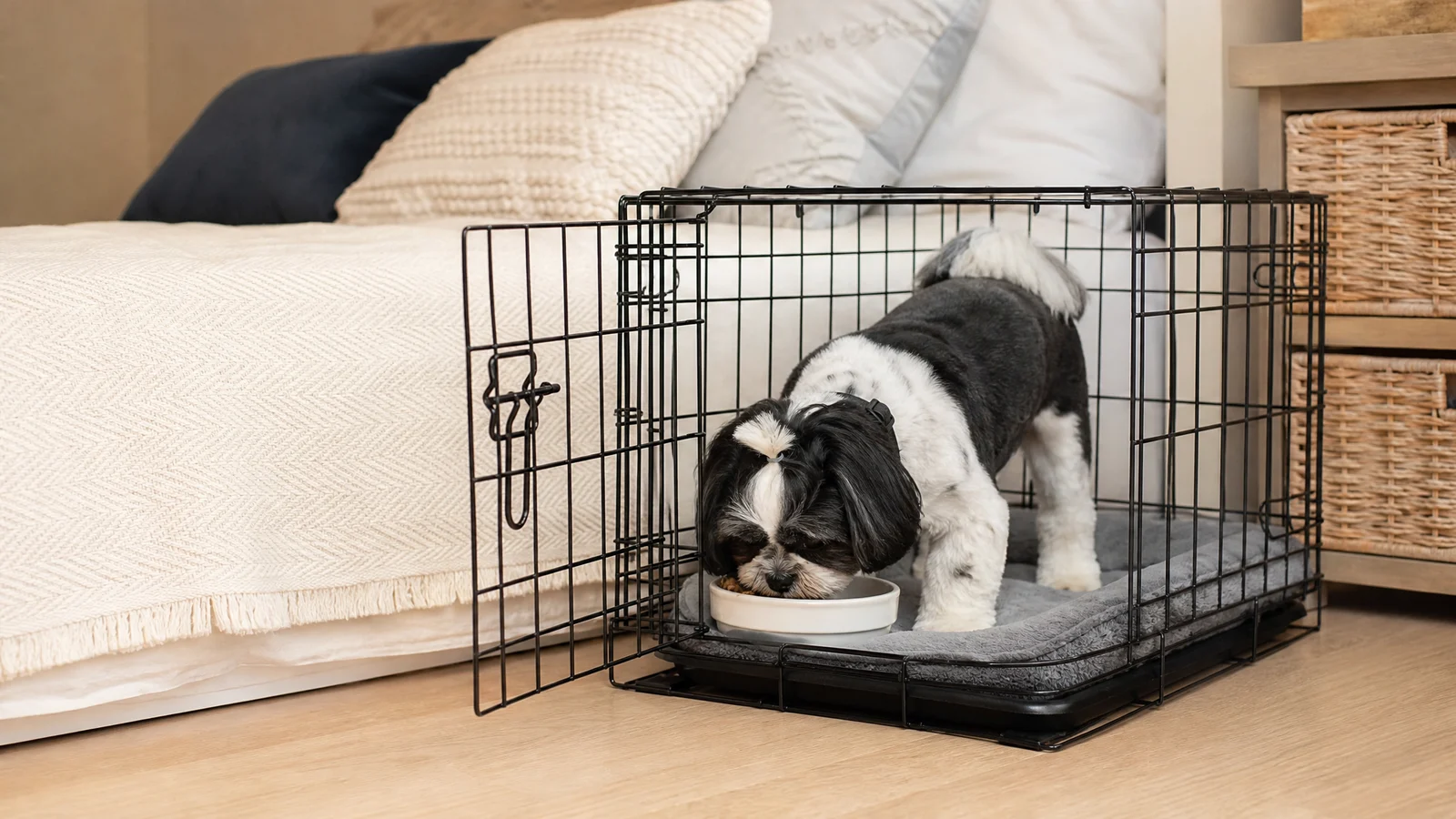 Training basicsCrate Training a Shih Tzu: Crate Size, First Nights and a Dry Beard
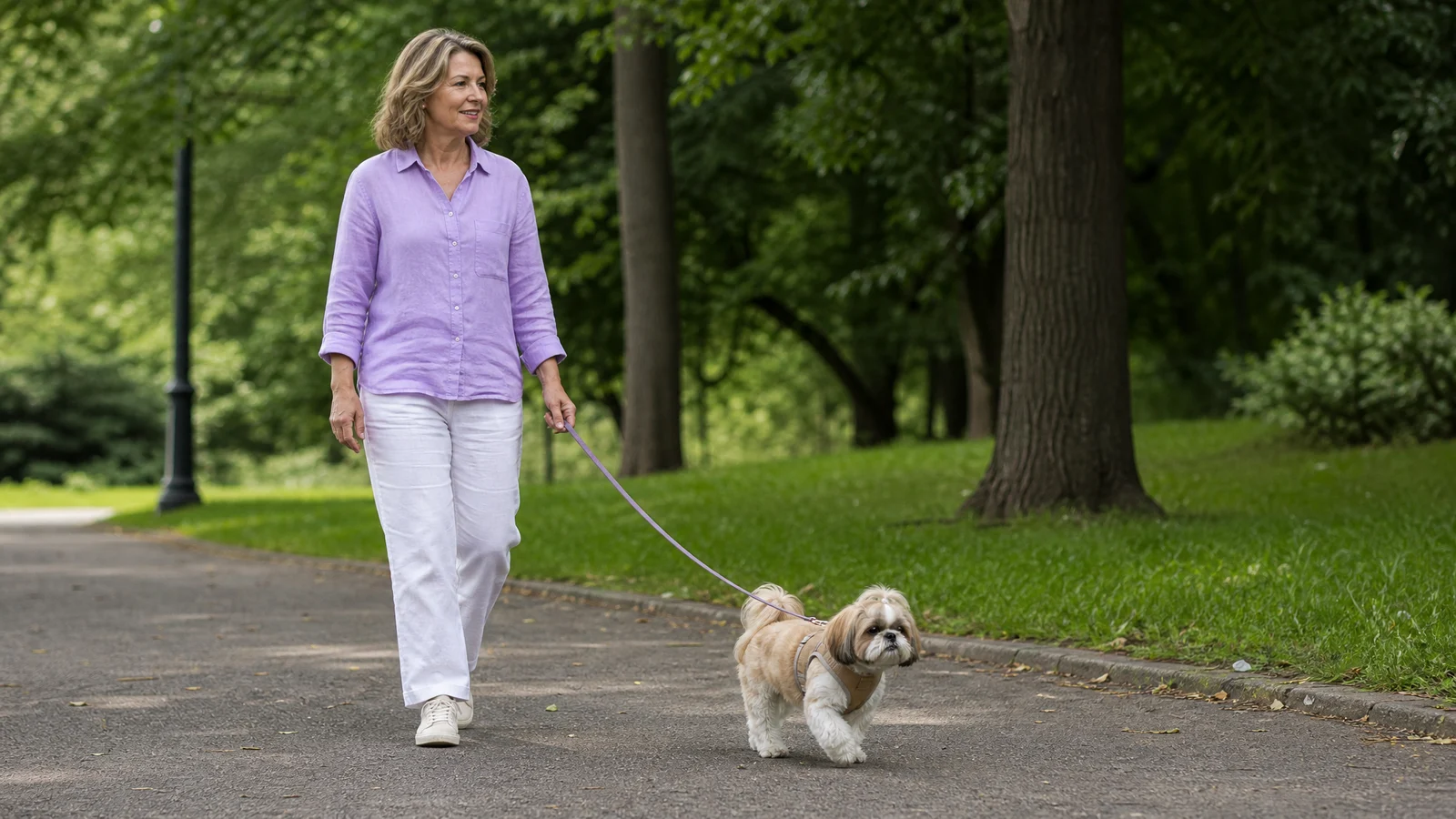 Exercise and jobsHow Much Exercise Does a Shih Tzu Need? Walks and Heat Limits
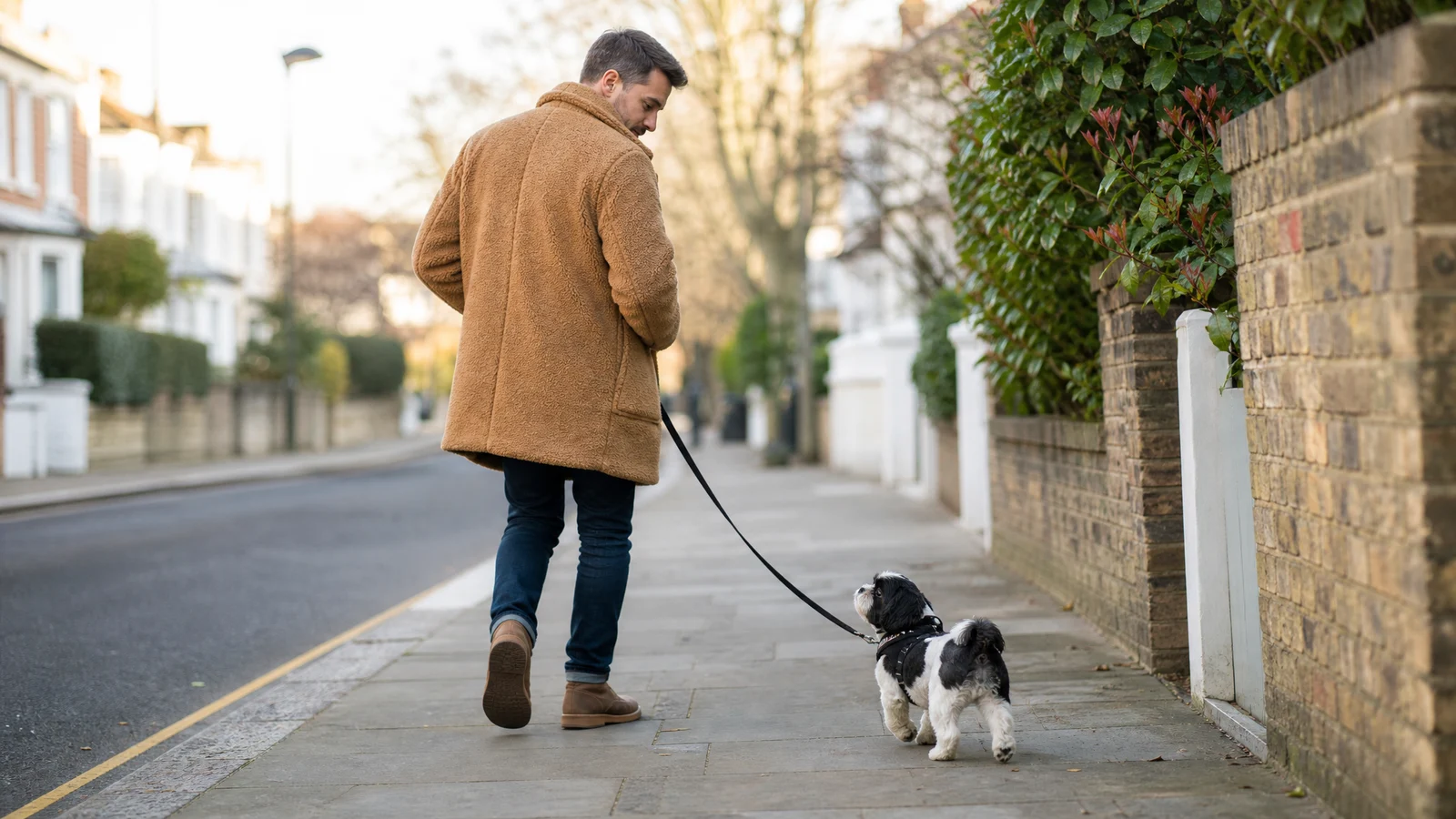 Training basicsShih Tzu Harness and Leash Training for Walks Without Pulling