 Shih Tzu
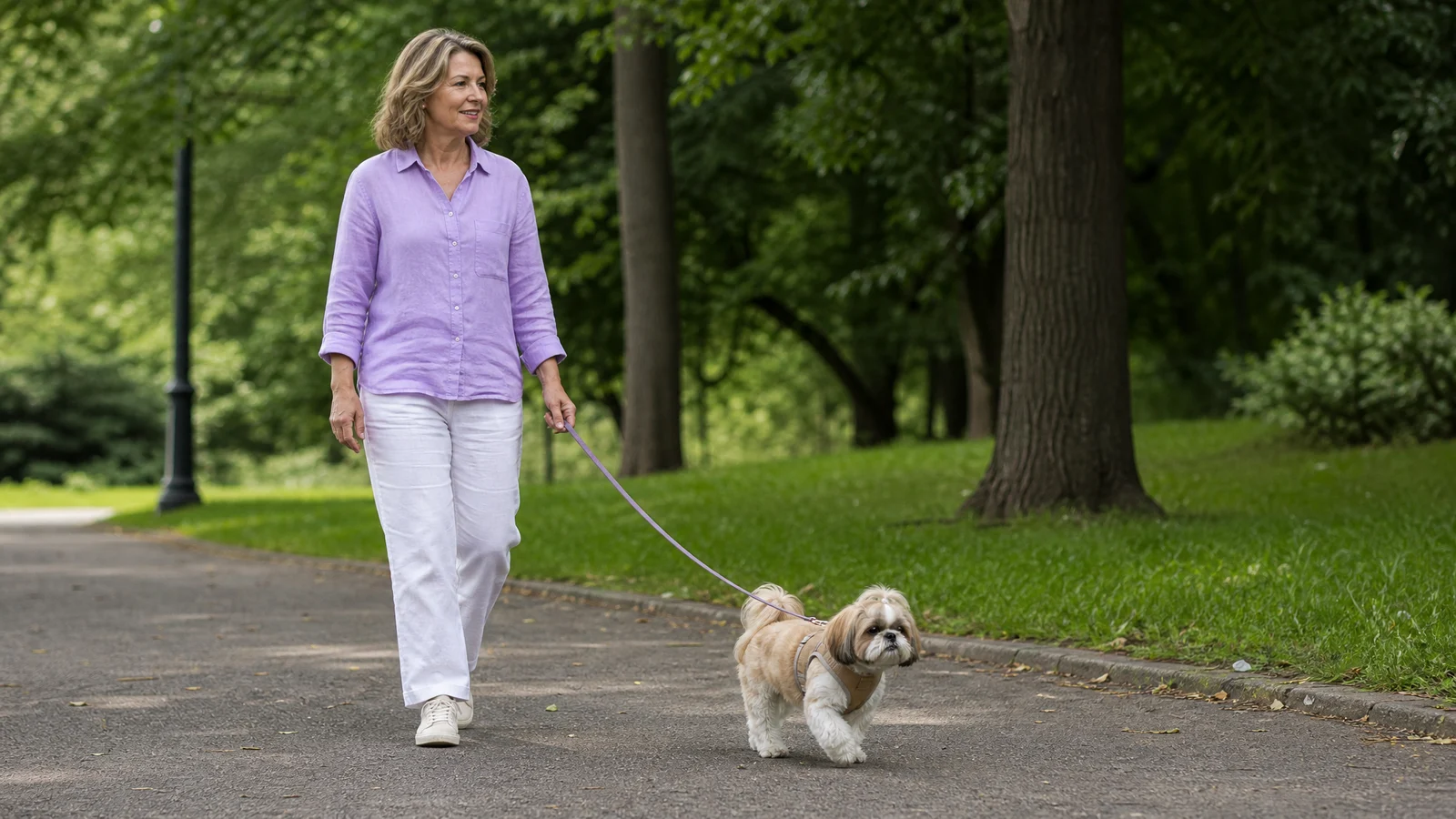
A 3 out of 5 for energy sounds like a shrug, but for a small, long-coated companion it works more like a plan: a walk every day, plenty of play at home, and no marathon training. Published advice turns that rating into different numbers of minutes, which leaves many owners unsure whether to do almost nothing or head out for an hour.
The stakes run in both directions. With too little, a bright and playful dog finds their own entertainment, often in ways you won't like. With too much, or at the wrong hour, a heavy coat and a short face turn a pleasant outing into a risk. Get it right and you have a relaxed, affectionate dog who is content between short outings.
In this article, we'll go through the 15 to 20 minute question, how puppies and adults differ, what indoor games can and cannot replace, how to time walks around heat, and where coat care fits. We reviewed 1,152 Shih Tzu owners' first-hand accounts alongside the published guidance, and the everyday pattern turns out steadier than the arguments about it.
Minimal Exercise Versus a Daily Shih Tzu Walk
Read two pieces of guidance on this breed back to back and they seem to disagree. One says that a dog bred as a house companion needs minimal exercise, with short daily walks and indoor playtime meeting their needs. The other puts a number on it, daily 15–20 minute walks and play sessions, and adds that the breed can be athletic enough to make great agility dogs.
We read the gap as a difference in emphasis rather than a real conflict. "Minimal" is spelled out as a daily walk plus play, which is the same routine the second source describes in minutes. Where we part company with the lazy version of the advice is the idea that a small dog gets enough by trotting from room to room. Minimal should never mean none.
A breeder writing for the breed club makes the point sharply. Heavy emphasis on coat makes it hard to let these dogs run and play every day, yet exercise is essential, and many show dogs end up in flabby condition. Pacing around a small ex-pen does not count either, and long confinement without play breaks can wear on a dog psychologically.
Owners fill in the middle. Among those who give a usual walk length, most settle around 30 minutes, with a good number of dogs tired or uninterested beyond that and a few walking less. How often they go varies widely, from one walk a day to four shorter ones, and some households lean on a fenced yard alongside or instead of walks.
A workable floor for most healthy adults looks like this:
- A daily walk of roughly 15 to 20 minutes, stretched toward 30 on days when your dog is clearly still keen.
- At least one real play session on top, such as tug, chase or fetch down a hallway, where your dog gets to run flat out for a short stretch.
- Mental work in small doses, like a few minutes of training or a scatter of treats to sniff out.
- Room to adjust, because weather, age and the individual dog all move the line.
Shih Tzu Puppy and Adult Exercise Needs
A Shih Tzu puppy and an adult ask for different things, and the usual mistake is to treat the puppy's frantic energy as a promise about the adult's. Puppies play in bursts, a few minutes of zoomies, tug or furniture parkour, and then a rest suits them. Several short sessions beat one long outing, and they teach your puppy that moving around with you is fun.
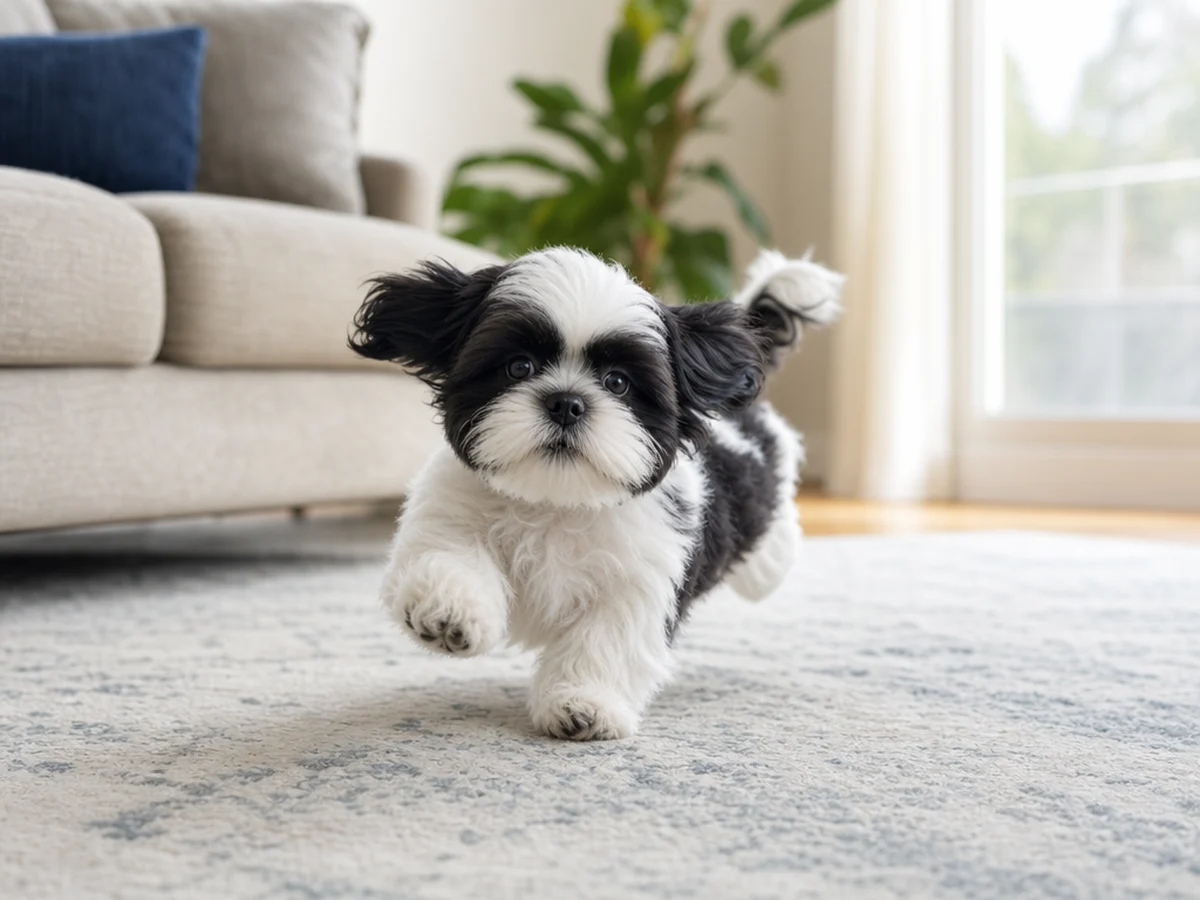
The first leash walks matter more than their length. Follow the puppy rather than dragging them after you, keep the experience cheerful because a bad first walk carries into later ones, and use a harness so nothing presses on the throat, especially during teething, when some puppies sniffle and snort. Praise and cheerful first walks help make walking something your puppy enjoys.
The contrast shows most clearly side by side.
| Question | Puppy | Adult |
|---|---|---|
| Play style | Short bursts, then a rest | Steadier, with play added to a daily walk |
| Walk pattern | Brief, following their leash | Regular, from about 15–20 minutes up to around 30 |
| Stamina | Builds gradually | Shifts with age and weather |
| Main job | Making walking enjoyable | Keeping the routine steady |
Adults settle into the 30-minute picture, though the range is wide. Some owners report outings of two hours on weekends or a few hours in the forest. Others have a dog who is done after 10 or 20 minutes and asks to be carried home, or who is tired for days after a single long day.
Build stamina in small steps, because a dog who finishes happy is worth more than one who finishes a record.
Stamina also changes with age and weather, and owners often save their longest walks for cool days. The excitable stage passes too, and our piece on when Shih Tzus calm down explains what adolescence does to energy and focus.
Can Indoor Games Replace Outdoor Exercise?
Partly, and on wrong-weather days completely, but not as a standing arrangement. Indoor play does real work: owners describe long fetch sessions down a hallway, tug, pillow wrestling, a flirt pole and sprints with a housemate dog, and that kind of session gives your Shih Tzu real exercise. A living room makes a perfectly good racetrack for a short-legged dog.
Scent games are the best indoor option because they tire the brain as much as the body. Sniffing, whether at home or out on a walk, is stimulating and calming, and almost any dog can do nose work, with high-energy dogs learning to focus as a bonus. Hide a few treats around a room, let your dog hunt them out, and you have given them a real job in a few minutes.
What the house cannot supply is novelty. Walks bring new smells, new people, other dogs and daylight, and owners link mischief to the lack of them: chewing that stopped once a daily walk began, foot-dragging cured by choosing a new route, trouble that eased within a week of daytime company with other dogs.
Our position is to use indoor games to top up the day and to cover bad weather, and to keep the walk as the daily anchor. Short training sessions slot in naturally, since a few minutes of sit, down or a trick with a treat and praise counts as mental exercise, and our guide on how to train a Shih Tzu covers the building blocks. Owners who report progress describe short, repeated, positive sessions rather than long ones.
Cool Dawn Exercise, Not Noon Heat
The common habit is to walk whenever the household has a gap: lunch break, mid-afternoon, straight after work. For this breed the clock matters more than the length. Heavy coats and short faces mean Shih Tzu do not tolerate heat well, and flat-faced dogs can struggle to pant enough to cool off, sometimes during and after exercise rather than only at the peak. That makes heat the one hard limit in an otherwise forgiving routine.
Timing the Walk
Go in the early morning or the evening, after the most intense heat has passed, and keep the outing short with plenty of rest and water breaks, since a dog may not know their own limits. In hot weather, offer water at least every 15 to 20 minutes from a familiar bowl you bring yourself, and cut the walk short if your dog is too excited to drink. On the hottest days, play indoors instead. A parked car is never a waiting room, however brief the errand.
Water Play and Warning Signs
A pool is not a cooling plan, because the breed is not good at swimming, and owners find their dogs split between loving ponds and disliking even an empty bathtub. Keep any water play shallow, supervised and unforced. Signs of overheating or labored breathing mean stopping the walk and calling a vet promptly.
The opposite season asks for little. Owners say their Shih Tzus feel the cold and wear sweaters or fleece, and most dogs tolerate or love them, while a minority dislike a coat, so introduce clothing calmly and pair it with treats.
This is general information, not veterinary advice. Flat-faced dogs vary, so ask your veterinarian which activities and how much exercise suit your dog, keep up regular checkups, and call promptly if breathing ever looks labored.
Does a Shih Tzu Tire Like a Terrier?
No, and the energy rating of 3 out of 5, the midpoint between couch potato and high energy, explains why. A sportier small dog bred with a job in mind tends to treat a 20-minute stroll as a warm-up. Some breeds need at least one to two hours of exercise a day, and working breeds significantly more. The Shih Tzu sits well short of that, in the middle of the scale, with a moderate love of play and surprising bursts of speed.
The individual dog matters more than any rating. Owners with more than one Shih Tzu often describe near-opposites under one roof: one tireless on walks, another finished at 20 minutes, one quick and eager, another unable to hold a sit-stay. Calm, lower-energy dogs exist, including rescues who prefer to stay close beside you at the park, and so do hyper ones who can outrun a hound. Judge yours, not the label.
Because dogs differ in when they tire, watch for the signs:
- Slowing down, lagging behind or stopping to look back at you.
- Asking to be picked up, which is a request for help rather than stubbornness.
- Losing interest in smells and treats that normally grab them.
- Needing a lot of rest afterward, or seeming tired for days after a big outing.
When you see them, turn for home, carry your dog if needed, and end a little sooner next time. A dog who is never asked for more than they have to give never learns to dread the leash.
Coat Care Beside Daily Exercise
The same breeder who insists on exercise warns that coat care must not crowd it out, and the warning matters in a breed rated 4 out of 5 on a grooming scale where 5 means daily. A long, show-style coat makes owners cautious about letting a dog romp, and the dog pays for that caution.
A brushed coat comes home from a walk easy to deal with. A few minutes with a comb lifts out debris and the first hint of tangles, and your dog learns that outdoor time ends in a pleasant ritual. A matted coat does the opposite: tangles pull when the dog runs, handling becomes a struggle, outings get shorter, and the cycle feeds itself.
Many owners keep the coat trimmed shorter, which lets their dog run freely and cuts down on winter snowballs. Those who keep it long accept the snowballs and keep a towel by the door. Check under harness straps too, because some owners find that mesh harnesses mat the coat after every walk, and a different style may help. Pair every grooming session with treats and praise, and it becomes part of the routine your dog looks forward to.
Questions Shih Tzu Owners Ask Next
If one idea runs through all of this, it is a routine that is short, steady and cool: a dependable daily walk, a burst of play, a little brain work, and the heat kept off. The questions that follow usually come from there.
- How do you walk a Shih Tzu without pulling or coughing at the end of the leash? Our guide to harness and leash training takes you through it.
- Will the zoomies ever stop? Our look at training through adolescence describes what to expect.
- Can a Shih Tzu be trusted off leash? Often not yet, and teaching a Shih Tzu to come lays out the steps.
Whichever you read next, keep the walk short, the pace steady and the air cool, and your dog will meet most days with exactly the energy they were bred to have.
 Training basicsShih Tzu Harness and Leash Training for Walks Without Pulling
 Puppy trainingShih Tzu Puppy Training Timeline: From 12 Weeks to Adolescence
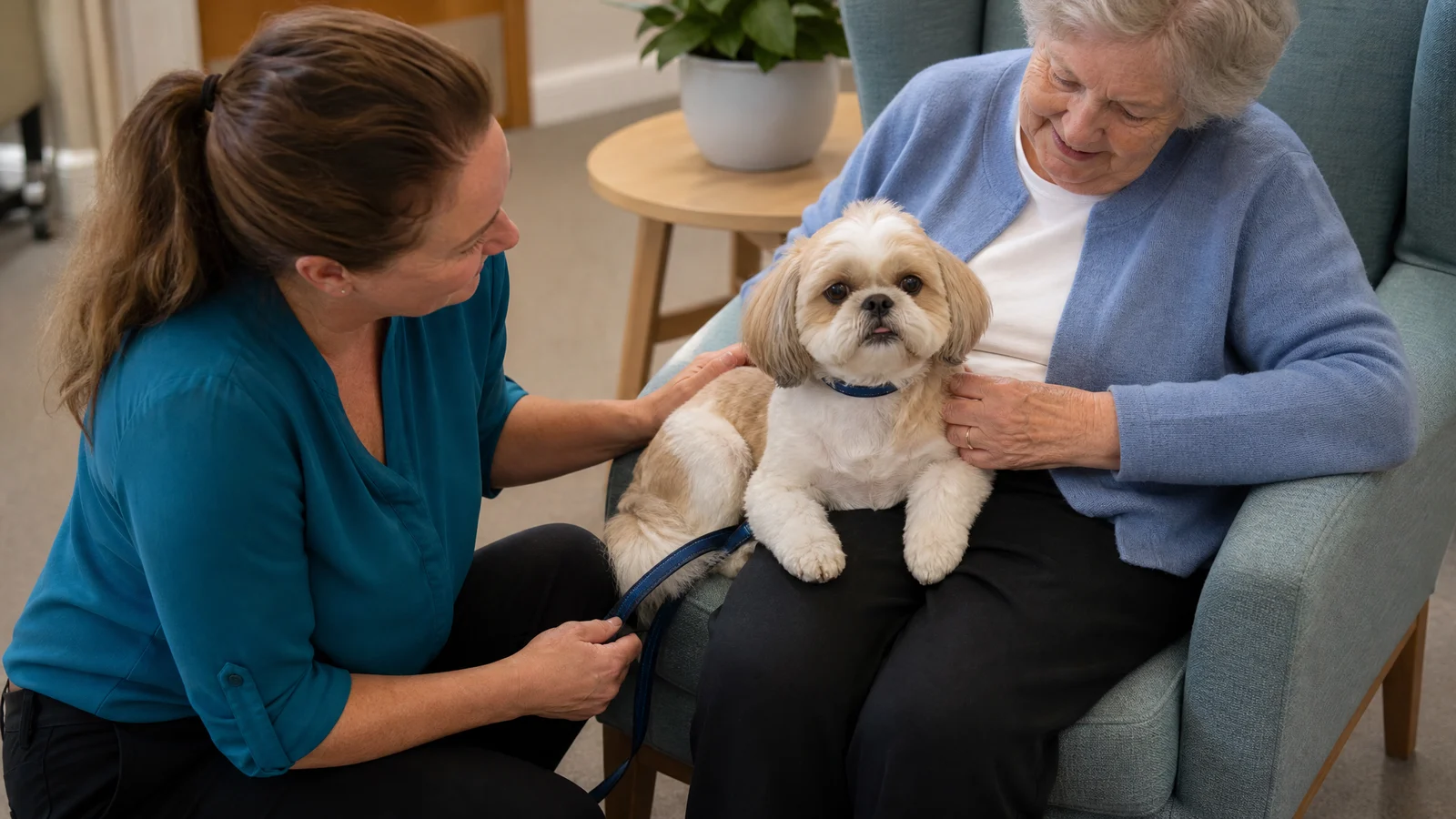 Exercise and jobsCan a Shih Tzu Be a Service Dog? Therapy and Support Roles